

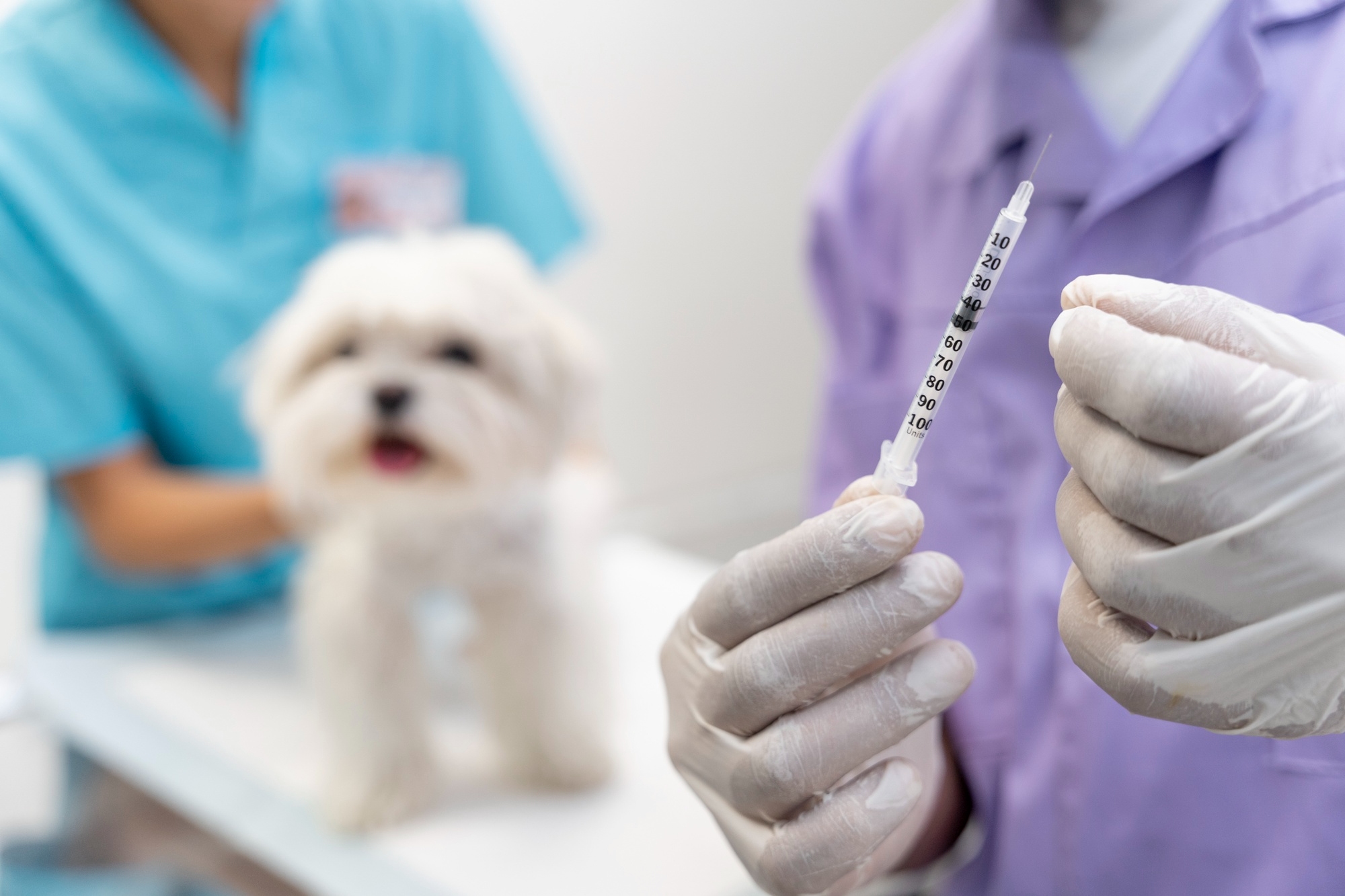
Heartworm disease is one of the most serious and life-threatening conditions a dog can face. It is transmitted through a single mosquito bite, develops silently over months, and by the time symptoms appear the damage to the heart, lungs, and blood vessels is often already significant. The good news is that heartworm disease is entirely preventable. For pet owners seeking the most reliable and convenient form of protection, a heartworm prevention injection for dogs offers a practical alternative to monthly oral or topical treatments that depends on nothing more than a once-yearly veterinary visit.
This guide explains how heartworm disease develops, why prevention is so critical, how a heartworm shot for dogs works, and what makes the injectable approach particularly well-suited for many dogs and their owners.
How Heartworm Disease Develops in Dogs
Heartworm disease is caused by a parasitic worm called Dirofilaria immitis. It is spread exclusively through the bite of an infected mosquito. When a mosquito carrying heartworm larvae bites a dog, the larvae enter the dog’s tissue and begin a migration through the body. Over the course of approximately six months these larvae mature into adult worms that take up residence primarily in the heart, pulmonary arteries, and lungs.
Adult heartworms can grow to significant lengths and a single infected dog may harbor dozens of worms at once. The physical presence of worms within the cardiovascular system causes progressive inflammation and obstruction. The heart must work harder to pump blood against the resistance created by the worms, the pulmonary arteries become inflamed and scarred, and lung tissue begins to suffer from reduced blood flow and chronic irritation.
In the early stages of infection most dogs show no symptoms at all. This quiet progression is one of the most deceptive aspects of heartworm disease. By the time a dog begins coughing persistently, tiring easily, losing weight, or showing signs of heart or respiratory distress, the infection is typically well established and treatment is substantially more involved and costly than prevention.
In the most severe cases a large mass of worms can obstruct blood return to the heart causing a sudden collapse known as caval syndrome. This is a life-threatening emergency that requires urgent surgical intervention. Understanding why prevention matters so much begins with recognizing that heartworm disease is not a condition that announces itself early enough to allow a leisurely response.
For a broader overview of heartworm transmission, stages, and prevention strategies, this complete guide on how to protect your pet from heartworms covers the full picture in detail.

Why Consistent Prevention Is the Only Reliable Defense
No aspect of a dog’s lifestyle provides meaningful protection from heartworm exposure. Indoor dogs are bitten by mosquitoes that enter through open doors and windows. Dogs in cooler climates encounter mosquitoes during warmer months. Dogs in warm humid regions face year-round exposure. The American Heartworm Society recommends year-round heartworm prevention for all dogs regardless of where they live or how much time they spend outdoors.
The reason consistency matters so much is how heartworm preventatives work. They do not repel mosquitoes or kill adult worms. Instead they eliminate heartworm larvae that have entered the dog’s body within a defined window of time following infection. Monthly oral or topical preventatives work backward, clearing larvae from the previous month each time a dose is given. This means that a missed dose leaves the dog unprotected and allows larvae from that period to continue developing.
When protection lapses even briefly the risk of larvae maturing past the point where preventative treatment can eliminate them increases significantly. This is one of the most compelling reasons why a heartworm prevention injection for dogs, which removes the reliance on monthly owner-administered doses, offers an important advantage for many households.
What Is ProHeart 12 for Dogs?
ProHeart 12 for dogs is an injectable heartworm preventative that provides twelve months of continuous protection against heartworm disease from a single subcutaneous injection. It is administered by a veterinarian once a year, making it the longest-lasting injectable option currently available for canine heartworm prevention.
The active compound in ProHeart 12 injection works by forming a sustained-release depot under the skin that gradually releases the preventative over the course of the year. As larvae enter the dog’s body following a mosquito bite they are eliminated by the active compound before they can develop into adult worms. Because the release is continuous rather than pulsed there is no gap in coverage between doses the way there can be with monthly treatments when doses are missed or delayed.
ProHeart 12 for dogs is approved for use in dogs six months of age and older. Before receiving the injection dogs should be tested for existing heartworm infection since giving a preventative to a dog that already has adult heartworms can cause a serious reaction. A negative heartworm test result is required before starting any preventative program and should be repeated annually.
The Advantages of a Heartworm Shot for Dogs
Understanding why the injectable approach suits many dogs and owners helps you make an informed decision alongside your veterinarian.
Uninterrupted Year-Round Protection
The most significant advantage of a heartworm shot for dogs is continuous protection without the risk of missed doses. With monthly treatments the window between doses is tight and a delay of even a few days can create a gap in coverage. Life gets busy and even the most attentive pet owners occasionally lose track of timing. One injection annually removes this variable entirely and ensures your dog is protected every day of the year.
Convenience for Owners and Dogs
For dogs who resist taking oral tablets or who have digestive sensitivities that make oral medications less ideal, an injectable option given during an annual veterinary visit eliminates the daily or monthly challenge of administration. It also removes the need for owners to maintain a consistent monthly schedule at home. A single vet visit handles an entire year of heartworm protection in one step.
Consistent Drug Levels
The sustained-release formulation of ProHeart 12 injection maintains more stable levels of the active compound in the dog’s system over time compared to the peaks and troughs that naturally occur with monthly dosing. This consistency supports reliable larval elimination throughout the year.
Combined Annual Preventive Care
The ProHeart 12 injection is administered at a veterinary visit which naturally aligns with annual wellness care including physical examination, heartworm testing, and other parasite screening. Rather than managing heartworm prevention separately at home it becomes part of a single comprehensive annual health appointment. This integration supports the broader goal of consistent preventive veterinary care which is one of the most effective strategies for maintaining your dog’s long-term health. For more on why consistent preventive care matters across all aspects of pet health, this article on why preventive care for pets is crucial for early detection of health issues offers a helpful perspective.
Who Is a Good Candidate for ProHeart 12?
ProHeart 12 for dogs is a strong option for a wide range of dogs but your veterinarian will assess your individual pet before recommending it. Dogs who may be particularly well suited include:
- Dogs whose owners find monthly preventative administration difficult to maintain consistently
- Dogs who resist or refuse oral medications
- Dogs with digestive sensitivities that affect the reliability of oral treatments
- Dogs in heartworm-endemic regions where uninterrupted year-round protection is especially critical
- Dogs with an otherwise healthy profile appropriate for the injection
ProHeart 12 injection is not recommended for dogs that are sick, underweight, or have a history of allergic reactions to prior ProHeart products. As with any veterinary treatment the vet will review your dog’s health history and current status before proceeding. Dogs must test negative for current heartworm infection prior to receiving the injection.
Recognizing the Signs of Heartworm Disease
Because prevention is so much preferable to treatment, knowing the warning signs of heartworm infection helps owners understand what they are working to prevent. Many of these signs do not appear until the disease has progressed and caused meaningful cardiovascular damage.
Early and mild signs include:
- A mild occasional cough that persists over weeks
- Reluctance to exercise or tiring more quickly than usual during activity
- Reduced appetite with gradual weight loss
- A general decrease in energy and enthusiasm
As the infection advances and worm burden increases the signs become more serious:
- A persistent and worsening cough
- Difficulty breathing during activity or at rest
- A swollen abdomen from fluid accumulation
- Fainting or collapse following exertion
- Pale gums indicating poor circulation
Advanced heartworm disease causes visible and significant deterioration in a dog’s quality of life. Even with treatment the damage to the heart and lungs is not fully reversible, which is why preventing the infection in the first place is so much more effective than managing its consequences. For guidance on recognizing when health symptoms require urgent veterinary attention, this article on emergency vet care and how to recognize when your pet needs immediate attention is a helpful reference.
The Annual Heartworm Testing Requirement
Annual heartworm testing is required before administering a heartworm prevention injection for dogs regardless of whether the dog has been on consistent prevention. This is not simply a formality. Testing confirms that no active adult heartworm infection is present before treatment is given. Administering a preventative to a dog with an existing adult heartworm infection can cause a serious and potentially life-threatening reaction as dying larvae trigger an inflammatory response.
The test itself is simple, requiring only a small blood sample. Results are typically available within minutes at a veterinary clinic. A negative result confirms the dog is free of adult heartworm infection and clears the way for the ProHeart 12 injection to be given safely.
Even dogs that have been on consistent monthly prevention are tested annually because no preventative is infallible. A missed dose, a product failure, or a brief lapse in coverage at any point could result in larvae that survived and matured. Annual testing provides an important safety check that ensures any breakthrough infection is caught before it advances.
For more on the role that regular testing and wellness monitoring play in keeping pets healthy year-round, this guide on why regular vet checkups are the best gift for your pet’s health explains the broader value of consistent veterinary engagement.
What to Expect at a ProHeart 12 Appointment
Knowing what happens during the appointment makes the process straightforward and less stressful for both dog and owner.
Your veterinarian will begin by reviewing your dog’s health history and performing a physical examination to confirm the dog is healthy and appropriate for the injection. A heartworm blood test will be conducted and results reviewed. Once a negative result is confirmed the injection is given subcutaneously, typically between the shoulder blades.
Most dogs tolerate the injection well with minimal reaction. Your veterinarian will advise you on what to monitor for the hours and days following the injection. Mild and temporary reactions at the injection site are uncommon but possible. Serious reactions are rare and your vet will discuss any specific considerations based on your dog’s health profile.
After the appointment you and your dog are done with heartworm prevention for the year. No monthly reminders, no pills to hide in food, no topical applications. Your next ProHeart 12 injection will be due twelve months later at the following annual wellness visit.
Heartworm Prevention as Part of a Broader Parasite Protection Plan
While ProHeart 12 provides robust protection against heartworm disease it does not cover all parasites. Depending on your dog’s lifestyle and local parasite pressures your veterinarian may recommend additional preventatives to address fleas, ticks, and intestinal worms.
Discussing your dog’s full parasite risk profile at the annual wellness visit allows your vet to recommend a coordinated prevention plan that addresses all relevant threats. For example, dogs in areas with significant flea and tick activity may benefit from a dedicated flea and tick prevention product used alongside the ProHeart 12 injection. For more on protecting dogs from fleas and ticks year-round, this guide on early signs of fleas and ticks in dogs and what every pet owner needs to know covers identification and prevention strategies.
For a comprehensive overview of parasite protection and how different prevention approaches work together, this resource on what you should know about parasites and your pet’s health provides a thorough foundation.

Conclusion
Heartworm disease is preventable and the heartworm prevention injection for dogs represents one of the most reliable and convenient tools available to keep your dog protected. A single ProHeart 12 injection once a year removes the risk of missed doses, provides continuous protection through a sustained-release formulation, and integrates naturally into your dog’s annual wellness care. For dogs and owners alike it simplifies protection without compromising its effectiveness.
At Kainer Veterinary Hospital, we are committed to providing personalized heartworm prevention guidance and comprehensive wellness care for every dog in our practice. We offer ProHeart 12 for dogs as part of a full parasite prevention program tailored to each pet’s individual health profile and lifestyle. To learn more, visit our ProHeart 12 service page or contact us today to schedule your dog’s annual heartworm test and prevention appointment.
FAQs
Q: How does a heartworm prevention injection for dogs work?
A: The injection uses a sustained-release formulation that gradually delivers the active compound over twelve months. It eliminates heartworm larvae that enter the dog’s body following mosquito bites before they can mature into adult worms. Because coverage is continuous there is no gap between doses the way there can be with monthly treatments.
Q: Is ProHeart 12 safe for all dogs?
A: ProHeart 12 for dogs is approved for healthy dogs six months of age and older. It is not recommended for dogs that are sick, underweight, or have a history of reactions to prior ProHeart products. Your veterinarian will assess your dog’s health before administering the injection to confirm it is a safe and appropriate option for your individual pet.
Q: Does my dog still need to be tested for heartworm before getting the injection?
A: Yes. Annual heartworm testing is required before any heartworm preventative is given including the ProHeart 12 injection. This confirms no active adult heartworm infection is present. Giving a preventative to a dog with existing adult worms can cause a serious reaction so a negative test result is an essential safety step before each injection.
Q: Can ProHeart 12 replace all other parasite preventatives?
A: No. ProHeart 12 injection provides protection specifically against heartworm disease. It does not protect against fleas, ticks, or intestinal parasites. Your veterinarian will discuss whether additional preventatives are recommended for your dog based on their lifestyle, geographic location, and overall parasite exposure risk during your annual wellness visit.
Q: What should I watch for after my dog receives the ProHeart 12 injection?
A: Most dogs experience no notable reaction. Mild and temporary swelling or sensitivity at the injection site is uncommon but possible. Your veterinarian will advise you on specific signs to watch for based on your dog’s health. Serious reactions are rare. Contact your vet promptly if you observe any concerning changes in behavior, breathing, or general comfort in the days following the injection.