

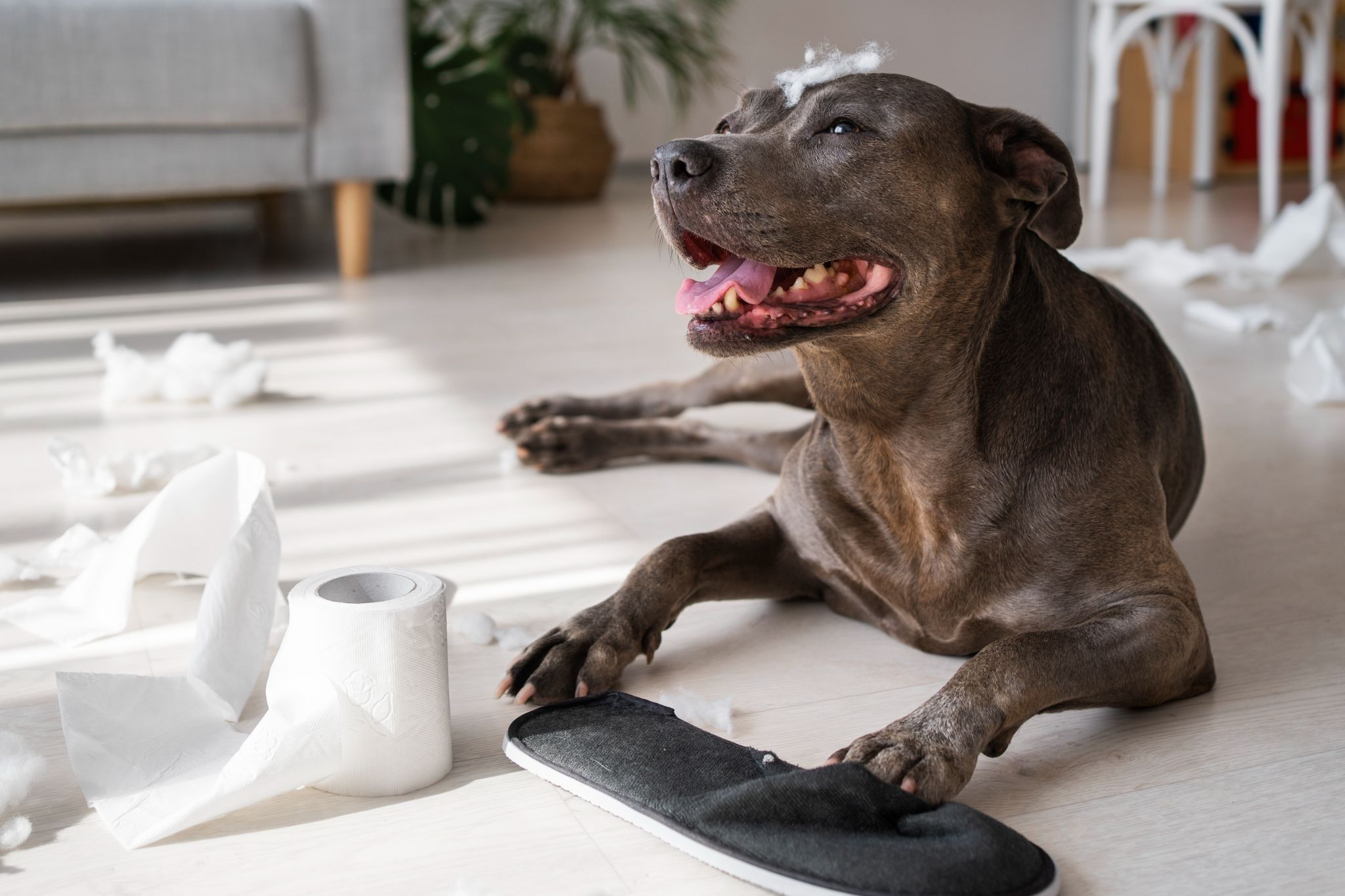
It only takes a second. One moment your dog is happily chewing, and the next a toy, a sock or something from the trash has disappeared. If your dog swallowed foreign object material, knowing what to do first can make a stressful moment feel far more manageable.
Dogs explore with their mouths, and a swallowed sock, toy or piece of rawhide can quickly become urgent. This guide explains the first steps when your dog ate foreign object material, the signs that point to an emergency vet for dogs, and what happens at the clinic.
Why Foreign Object Ingestion Is Serious
Some objects pass without harm. Others lodge in the esophagus, stomach or intestines and block the normal movement of food and fluid. Merck reports that young large breed dogs are more likely to develop an obstruction than older animals, and that behavioral problems such as pica and conditions that increase appetite are risk factors.
Merck also describes the linear foreign body, such as string or ribbon, which can be anchored at one end while the intestine bunches along it. Pulling on string that is visible can cause a perforation. If you see a string under the tongue or coming from the anus, do not pull it and call your veterinarian.
What Dogs Swallow and What to Watch For
Objects as varied as clothing, toys, bones and cobs are swallowed by dogs. The American College of Veterinary Surgeons lists commonly noted signs of a gastrointestinal foreign body: persistent vomiting, loss of appetite, belly pain, lethargy or dehydration, and diarrhea with or without blood. A dog that swallowed a toy may show none of these at first, so the signs are worth watching for over the hours that follow.
Immediate Steps to Take
If you believe your dog ate a foreign object, stay calm and gather information quickly.
Step 1: Identify What Was Swallowed
Work out what the object was, how large it was and about when it was swallowed. Look for chewed remnants nearby. Bring packaging or a matching item if you have one.
Step 2: Ask Before Trying to Make Your Dog Vomit
Whether vomiting is safe depends on the object and the timing. Sharp or caustic items can cause more injury on the way back up. Ask your veterinarian or a veterinary poison control service before trying anything at home.
Step 3: Call Your Veterinarian or an Emergency Clinic
Do not wait to see whether your dog passes the object. Call your regular clinic right away, or an emergency vet for dogs after hours. Describe what was swallowed, your dog’s size and breed and any symptoms.
Step 4: Watch for Warning Signs
Signs that a dog needs urgent care include:
• Repeated vomiting or retching
• Belly pain, a swollen belly or reluctance to be touched
• Refusing food or water
• Lethargy or weakness
• Pale gums
• Bloody vomit or stool
• Drooling, gagging or trouble breathing
For more on recognizing urgent situations, see this article on emergency vet care and how to recognize when your pet needs immediate attention.
What Happens at the Veterinary Clinic
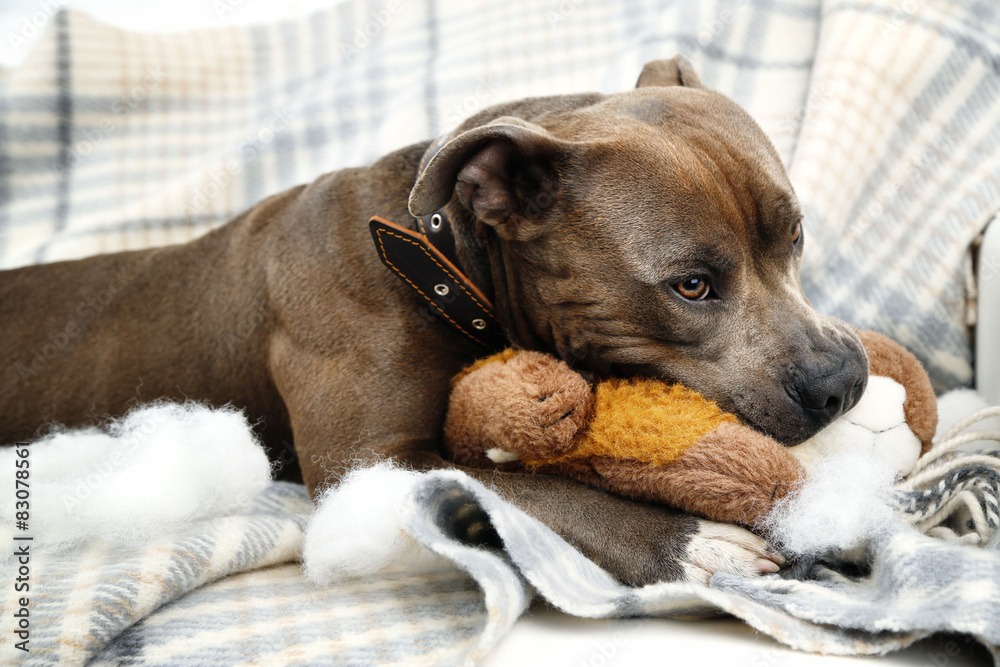
Your veterinarian takes a history and examines the abdomen. Merck lists X rays, with or without contrast, and ultrasound as the main imaging tools for finding an obstruction, and the ACVS adds that a CT scan is sometimes needed. Bloodwork checks hydration and electrolytes, which an obstruction can disturb.
Treatment Options
| Approach | When it fits | Limit |
| Monitoring for passage | A small smooth object in a stable dog | Merck says surgery is needed if the object has not passed within 36 to 48 hours or signs worsen |
| Endoscopy | Objects still in the stomach | Cannot reach past the upper small intestine and is not used for linear objects |
| Surgery to open the stomach or intestine | Objects lodged in the stomach or intestine | Requires opening the abdomen |
| Removal of damaged intestine | Intestine that is badly damaged | The healthy ends are joined, and leakage at the repair is a risk |
When surgery is needed, foreign object removal surgery opens the stomach or intestine to take the object out. The ACVS explains that if part of the intestine is badly damaged, that section is removed. For what recovery involves, see this guide on dog abdominal surgery procedures and recovery.
After Treatment
After surgery the ACVS notes that dogs stay on IV fluids with vital signs monitored, and that an early return to eating helps the gut heal. Merck explains that leakage at the repair, called dehiscence, typically appears 3 to 5 days after surgery, so the first week needs close watching. Your veterinarian gives specific instructions. For help at home, see this resource on how to keep your dog or cat comfortable after surgery.
Dogs at Higher Risk
Young large breed dogs and dogs with pica are at higher risk, according to Merck. Boredom, anxiety and curiosity can all lead to chewing. Exercise, mental stimulation and suitable chew toys help.
Preventing Foreign Object Ingestion
Steps that reduce risk include:
• Keep floors and surfaces clear of small objects.
• Store children’s toys and clothing out of reach.
• Choose chew toys too large to swallow and supervise chewing.
• Use trash cans with secure lids.
• Take extra care during holidays when ribbon and decorations are around.
For dogs that repeatedly eat foreign material, the ACVS suggests a basket muzzle. For general guidance on household hazards, see this article on what to do if your pet eats something they should not.
What the Sources Cannot Tell You
The sources do not say how long a particular object will take to pass, or which objects are safe to wait out. They describe when surgery is needed and the common signs. Only an exam and imaging can say what is happening in your dog.
Conclusion
A dog swallowed foreign object demands calm and quick action. Time matters, because the sooner an obstruction is found the less extensive the treatment is likely to be.
At Kainer Veterinary Hospital, our team diagnoses and treats foreign body ingestion in dogs, including foreign object removal surgery. Contact us today or come in right away if you believe your dog ate a foreign object.
Sources
Merck Veterinary Manual, Gastrointestinal Obstruction in Small Animals (2025). Veterinary reference. Supports the emergency status, risk factors, linear foreign bodies, imaging, the 36 to 48 hour window and leakage timing.
American College of Veterinary Surgeons, Gastrointestinal Foreign Bodies (updated 2026). Professional society. Supports the signs, surgery, aftercare and prevention advice.
FAQs
Q: How long does it take for a dog to pass a swallowed object?
A: It cannot be predicted from the outside. Merck says surgery is needed if an object has not passed within 36 to 48 hours or signs worsen, and that waiting is only reasonable under veterinary monitoring. Call your veterinarian first.
Q: Can a dog pass a swallowed toy piece without surgery?
A: Sometimes, if a piece is small and smooth and the dog stays well. Larger or irregular pieces are more likely to obstruct. Your veterinarian uses X rays or ultrasound to decide when the dog swallowed toy pieces need endoscopic or surgical removal.
Q: What should I never do if my dog swallowed a foreign object?
A: Do not pull on visible string, and do not try to make your dog vomit unless your veterinarian tells you to. Do not wait days to call. Vomiting, lethargy or belly pain after swallowing something calls for urgent care.
Q: How do vets remove a swallowed object without surgery?
A: For objects still in the stomach, a flexible camera tube called an endoscope can locate and grasp the object. Merck notes it cannot reach past the upper small intestine and is not used for linear objects.
Q: What should I bring to the clinic when my dog ate a foreign object?
A: Bring the packaging or a matching item if you have one, and note what is missing, when it happened and the number of times your dog has vomited. These details help your veterinarian decide on testing and treatment.