

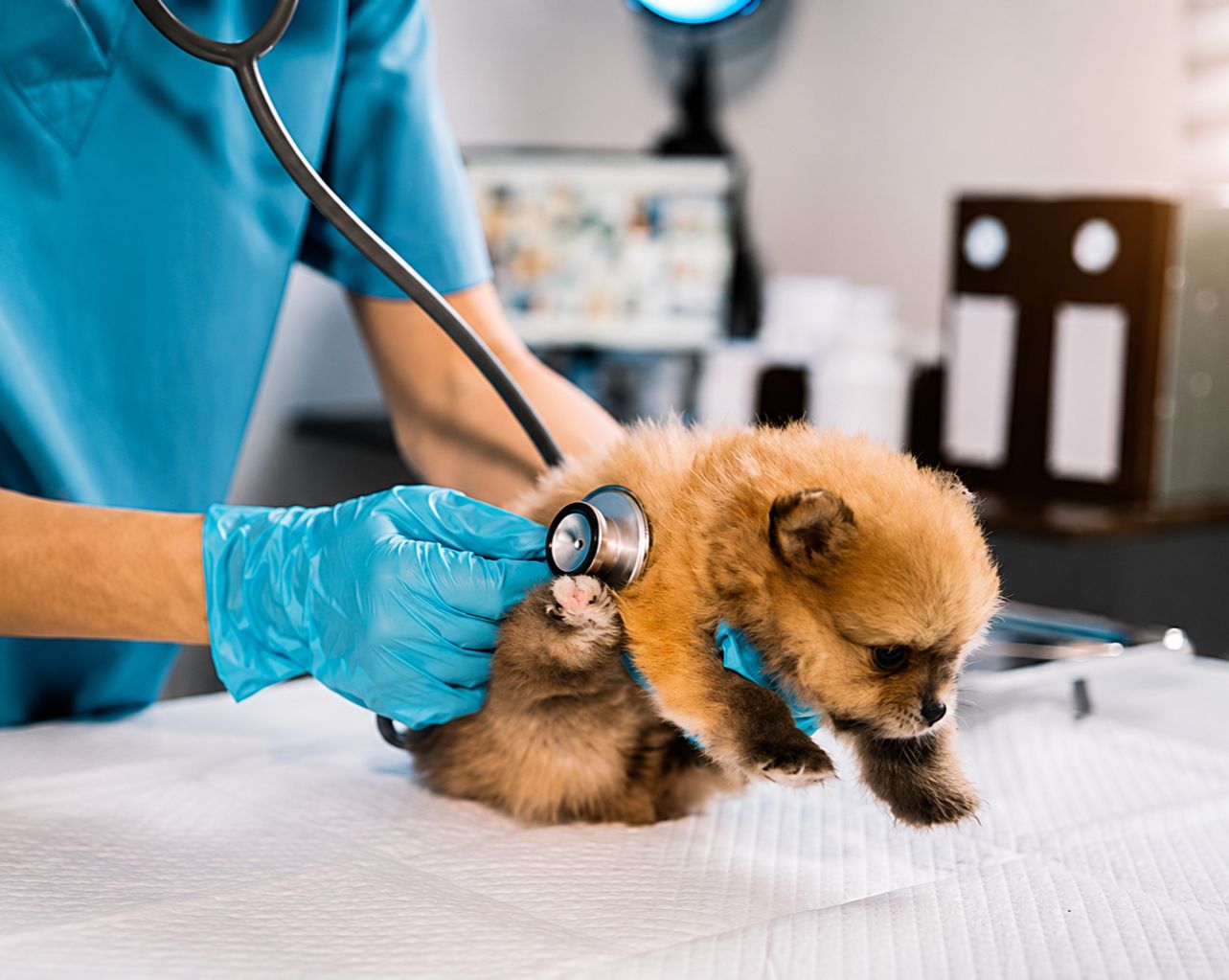
A puppy wellness exam is a veterinarian’s first thorough look at a new puppy’s health: a full physical exam, a weight and growth baseline, and the start of the vaccination and parasite prevention series. Most puppies need one every three to four weeks through about sixteen weeks of age.
Understanding the Puppy Wellness Exam
Why This Exam Matters So Much Early On
A puppy wellness exam does more than confirm that a new puppy looks healthy. It is the point where a veterinarian establishes a baseline for weight, growth, and development, checks for congenital issues that are not yet obvious, and starts the vaccination and parasite prevention plan that protects a puppy through the riskiest stage of life. Conditions that would be easy to manage if caught early can become more complicated if they are missed during these first visits.
How Often Puppies Need to Be Seen
Most puppies benefit from a wellness exam every three to four weeks during the first four months of life, timed to align with the vaccination series. After the initial series is complete, visits typically space out, though your veterinarian will tailor the exact schedule to your individual puppy.
Breed-Specific Considerations
Certain breeds carry a higher likelihood of specific developmental issues, and a veterinarian familiar with your puppy’s breed knows what to watch for accordingly. Large and giant breeds are monitored more closely for joint and growth-plate development, while breeds with known heart or eye conditions may receive additional screening earlier. This does not mean every puppy of a given breed develops a problem, but it does shape what your veterinarian pays closest attention to.
What If You Adopted an Older Puppy or One With an Unknown History
A puppy adopted from a shelter or rescue at several months of age, with little or no history available, still benefits enormously from a thorough first exam, though your veterinarian’s approach shifts slightly. Bloodwork and a fecal check often carry more weight in this situation, and your veterinarian may recommend restarting part of the vaccination series if there is no reliable proof of what was already given.
What Happens During a Puppy Wellness Exam
The Physical Examination
Every wellness exam includes a thorough head-to-tail physical, checking the eyes, ears, and mouth, listening to the heart and lungs, feeling the abdomen, and assessing the skin, coat, and joints. This is often where a veterinarian first notices something like a heart murmur, an umbilical hernia, or an orthopedic concern that would otherwise go unnoticed until it became more serious.
The ear and eye check catches issues that are easy for an owner to miss, since a mild ear infection or an early eye abnormality does not always change a puppy’s behavior in a way that would prompt a visit on its own. A veterinarian also checks skin and coat condition, since early signs of a flea allergy or a nutritional gap often show up here before they become obvious to an owner.
Weight and Growth Tracking
Puppies grow quickly, and tracking weight at each visit tells your veterinarian whether growth is on a healthy trajectory for the breed and age. A puppy gaining too little or too much weight can signal a nutritional issue, a parasite burden, or an underlying health concern worth investigating further. Plotting weight across several visits reveals a trend that a single measurement never could.
Vaccinations Begin at These Early Visits
Puppy visits are where the core vaccination series gets underway, protecting against diseases that are especially dangerous during puppyhood, including parvovirus and distemper. The vaccinations service covers how the practice structures this series from the first visit through the final booster.
Starting Parasite Prevention Early
Alongside vaccines, most puppies start monthly parasite prevention during these same early visits. Monthly heartworm prevention typically begins once a puppy reaches the appropriate age and weight, and a fecal test at one of these visits confirms whether any intestinal parasites need to be addressed.
Microchipping and Identification
Many families choose to have their puppy microchipped during one of these early visits, a quick procedure that places a small identification chip just under the skin between the shoulder blades.
Behavior and Socialization Guidance
Puppy visits are also a natural place to raise questions about house-training, crate training, and how to socialize a young puppy safely, balancing early socialization against the puppy’s still-developing immune protection.
Signs a Puppy Wellness Exam May Reveal
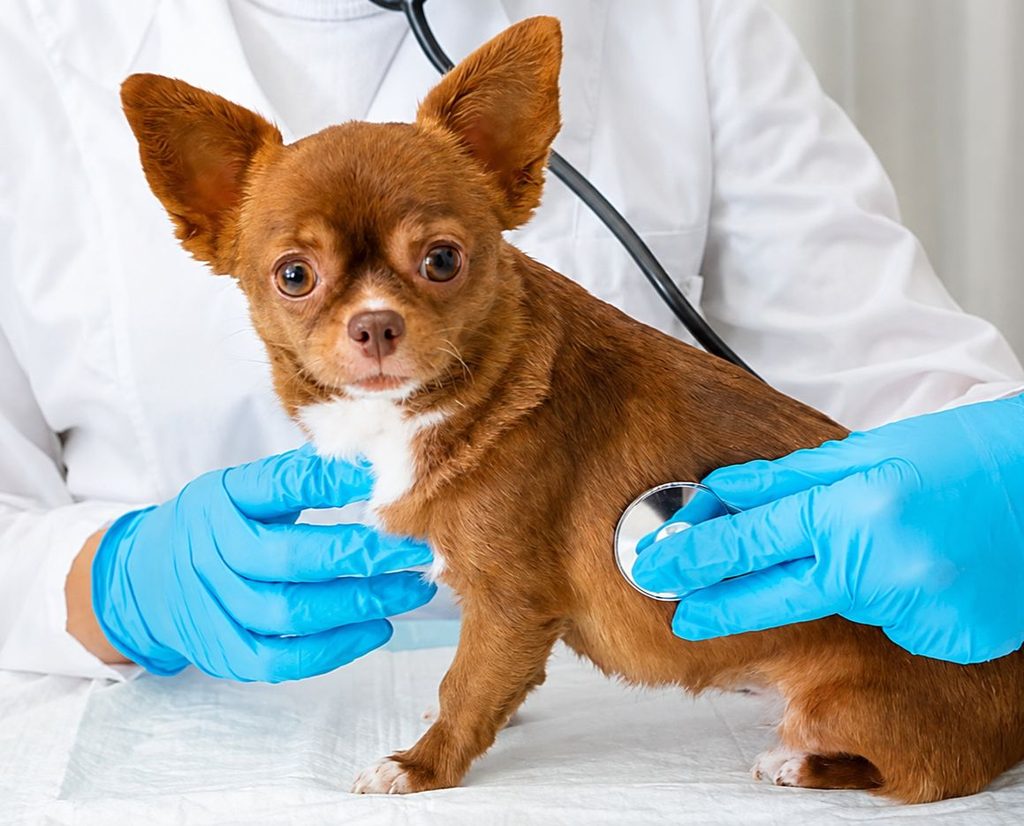
A handful of findings come up regularly enough during early puppy visits that it helps to know what they mean before you hear about them for the first time.
| Finding | What It May Mean |
| Heart murmur | Some resolve on their own with growth, while others need monitoring or further cardiac evaluation |
| Umbilical or inguinal hernia | A gap in the abdominal wall that may close on its own or require repair, often at the time of spay or neuter |
| Retained baby teeth | Adult teeth erupting without the baby tooth falling out, which can crowd the mouth if not addressed |
| Intestinal parasites on a fecal check | Common in puppies and treated with a targeted deworming plan |
| Uneven or abnormal gait | May point toward a developmental joint issue worth tracking as the puppy grows |
Why Catching These Early Makes a Real Difference
Many of the findings above are simpler to manage when caught during a scheduled exam rather than discovered later. A retained baby tooth left in place can crowd an adult tooth out of position. An untreated parasite burden can affect growth. Catching a problem while it is small keeps more treatment options open than catching it after it has progressed.
A heart murmur illustrates this well. Some murmurs detected in young puppies resolve on their own as the heart finishes developing, while others point toward a structural issue that benefits from monitoring. The only way to know which applies to a specific puppy is to identify the murmur early and follow its progression over the following visits.
When a Finding Warrants a Same-Day Follow-Up
Most findings are simply noted for monitoring at the next scheduled visit, but a small number call for quicker action. A heart murmur paired with visible breathing trouble, a hernia that appears painful, or a puppy not gaining weight despite eating normally are the kinds of findings that move a veterinarian to a sooner recheck.
Preparing for the Visit
- Bring any records from the breeder, shelter, or rescue, including notes on vaccines or deworming already given.
- Collect a fresh stool sample from within the past day if possible.
- Write down any behaviors or symptoms you have noticed, even minor ones.
- Bring a list of questions about feeding, training, or anything else on your mind.
- Keep your puppy calm before the visit with a short walk or play session.
Nutrition During Rapid Growth
Puppies have different nutritional needs than adult dogs, and getting feeding right during this stage supports healthy bone and joint development. The nutritional counseling available through the practice helps families choose a diet suited to their puppy’s breed and growth pattern.
Planning for Spay or Neuter
Somewhere during this first year, owners typically discuss the right timing for spaying or neutering. The practice’s spay and neuter guidance explains the long-term factors your veterinarian will weigh.
Building a Long-Term Relationship With Your Veterinary Team
A veterinarian who has seen a puppy grow from the first visit has a much deeper baseline understanding of what is normal for that individual dog. The value of regular checkups covers this in more depth.
Confirming Immunity Once the Series Is Complete
A titer test measures antibody levels in the blood and can confirm whether a puppy has developed protective immunity, which is a useful option for a rescue puppy with gaps in their history rather than defaulting to repeating the entire series unnecessarily.
What First-Time Puppy Owners Often Worry About
No question is too small. Excessive sleeping, occasional accidents during house-training, and clumsy movement are typically normal parts of puppyhood rather than warning signs.
Multi-Pet Households
Bringing a new puppy into a home with existing pets adds another layer of questions. It is also a good time to confirm resident pets are current on their own vaccinations, since a new puppy briefly increases everyone’s exposure risk until its own series is complete.
How This Differs From an Adult or Senior Wellness Exam
A puppy wellness exam shares the same core structure as any wellness visit, a physical exam, weight tracking, and preventive planning, but the focus shifts compared to an adult or senior visit. Puppy visits center on growth and vaccination timing, while adult visits shift toward maintenance and senior visits add screening for age-related conditions.
What a Puppy Wellness Exam Doesn’t Guarantee
A puppy wellness exam catches a great deal, but it is worth being honest about what it doesn’t.
Vaccines are one part of the visit where owners reasonably want a straight answer on risk. According to a 2023 study published in the Journal of the American Veterinary Medical Association, analyzing more than 4.6 million dogs across 1,119 clinics, adverse events occurred at a rate of 19.4 per 10,000 vaccinations, or about 0.19%. Most are mild and short-lived, such as soreness or brief lethargy, but the honest number is not zero, and it’s a fair thing to discuss before the first dose.
A single early exam also cannot rule out every condition that shows up later. Some developmental issues, particularly certain joint or growth-plate conditions in large breeds, are genuinely harder to identify at eight weeks than at eight months, which is part of why these exams continue on a schedule.
Giving Your Puppy the Strongest Start Possible
At Kainer Veterinary Hospital, Dr. Daniel Kainer and the team provide puppy wellness exams, vaccination series planning, and growth monitoring to help a new puppy start life on the right foot. Contact the practice to schedule your puppy’s first wellness exam.
FAQs
Q: What does a puppy wellness exam typically include?
A: A puppy wellness exam includes a full physical examination, weight and growth tracking, a fecal check for intestinal parasites, and the appropriate vaccinations for your puppy’s age. Your veterinarian will also flag anything worth monitoring at the next visit.
Q: How is a puppy first vet visit different from later checkups?
A: A puppy first vet visit focuses heavily on establishing a health baseline, starting the vaccination series, and catching any congenital issues early, since this is often the first thorough look at your puppy’s health. Later checkups build on that baseline and shift toward maintaining preventive care.
Q: What happens at a puppy wellness check if a problem is found?
A: If a puppy wellness check reveals something like a heart murmur or a hernia, your veterinarian will explain what was found, whether it needs immediate attention or ongoing monitoring, and what the next steps look like for your specific puppy. Many findings at this age are manageable precisely because they were caught early.
Q: How many wellness visits will my puppy need in the first year?
A: Most puppies are seen every three to four weeks through the vaccination series, typically ending around sixteen weeks of age, followed by a checkup around the one year mark. Your veterinarian will adjust this schedule based on your puppy’s individual needs and breed.
Q: Where can I schedule a puppy wellness exam in The Woodlands area?
A: Kainer Veterinary Hospital provides puppy wellness exams for families across The Woodlands, Conroe, Montgomery, and surrounding communities. Contact the practice to schedule your puppy’s first visit and start their vaccination series on time, before small issues have a chance to progress.