

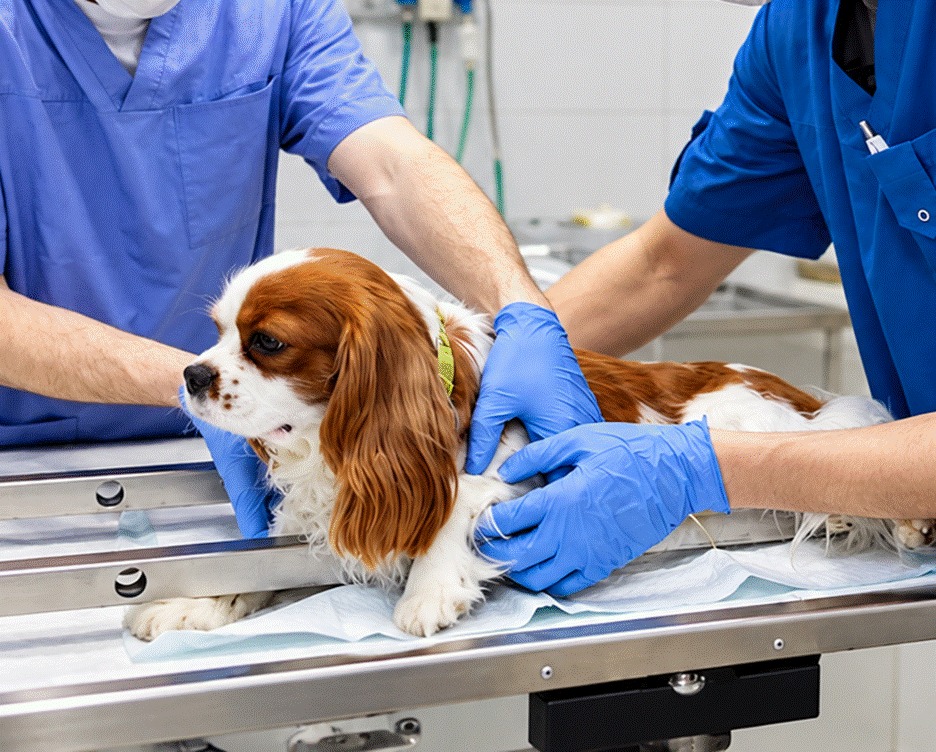
Dog foreign body surgery removes an object that is stuck in the stomach or intestine. The surgeon opens the stomach or intestine, takes the object out, and removes any damaged section. The biggest risk afterward is leakage at the repair, which the Merck Veterinary Manual says typically appears 3 to 5 days after surgery.
If your dog is vomiting repeatedly or straining with a painful belly after getting into something, call your vet now. The Merck Veterinary Manual states that gastrointestinal obstruction should be treated as an emergency, and our guide on what to do when a dog swallowed a foreign object covers the first steps at home.
Which Dogs Are at Higher Risk
Merck reports that young cats and young large-breed dogs are more likely to develop a foreign body obstruction than older animals, and that dogs are more likely than cats to swallow foreign objects. Behavioral problems like pica and conditions that increase appetite are also risk factors.
Signs My Dog Ate Something He Shouldn’t
The American College of Veterinary Surgeons lists these as commonly noted signs of a gastrointestinal foreign body. If you’re wondering about the signs your dog ate something he shouldn’t, watch for:
● Vomiting: persistent or repeated vomiting.
● Loss of appetite: refusing food.
● Belly pain: pain or discomfort in the abdomen.
● Lethargy or dehydration: a dog who seems unusually tired or dehydrated.
● Diarrhea: with or without blood.
● A visible string: string wrapped around the base of the tongue or coming from the anus.
If you see string under the tongue, don’t pull it, and call your vet right away if string is coming from the anus. Merck explains that a linear foreign body can be anchored at one end while the intestine bunches along it, and that pulling it can cause a perforation.
How Vets Confirm an Intestinal Blockage in Dogs
An intestinal blockage in dogs is usually confirmed with imaging. Merck lists X-rays, with or without contrast, and ultrasound as the main imaging tools for detecting obstruction, and the ACVS adds that a CT scan is sometimes needed. Bloodwork helps check hydration and electrolytes, which an obstruction can disturb. Our on-site diagnostics include the in-house lab work, digital X-rays, and ultrasound used for this workup.
| Approach | When It Fits | Limitation |
| Monitoring for passage | A small, smooth object in a stable dog | Merck says surgery is needed if the object hasn’t passed within 36 to 48 hours or signs worsen |
| Endoscopy | Objects still in the stomach | Can’t reach past the upper small intestine and isn’t used for linear objects |
| Gastrotomy or enterotomy | Objects lodged in the stomach or intestine | Requires opening the abdomen |
| Resection and anastomosis | Damaged or devitalized intestine | Leakage was reported in 5 to 13 percent of anastomoses in one multicenter study |
What Happens During Surgery for a Swallowed Object
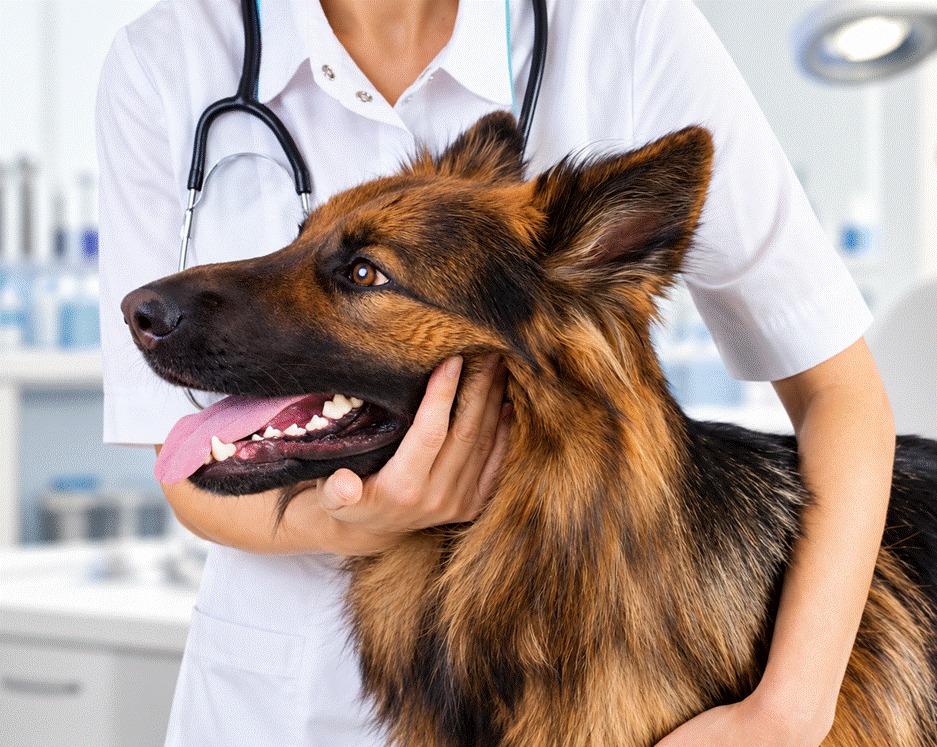
When a dog swallowed something and surgery is needed, the ACVS explains that the surgeon opens the stomach (gastrotomy) or intestine (enterotomy) to remove the object. If part of the intestine is badly damaged, that section is removed and the healthy ends are joined, a procedure called resection and anastomosis. The choice is usually made during surgery, once the surgeon can see the tissue. Kainer offers foreign object removal surgery for dogs and cats.
Merck states that the entire gastrointestinal tract is inspected for additional objects during surgery. After the procedure, the ACVS notes that dogs stay on IV fluids with their vital signs monitored, and that an early return to eating helps the gut heal.
The Real Risk: Leakage at the Repair
Leakage, called dehiscence, is the most serious complication. Merck explains that it commonly occurs 3 to 5 days after surgery, at the end of the lag phase of healing, and usually requires a second surgery. The ACVS lists lethargy, worsening appetite, vomiting, fever, incision drainage, and a swollen belly as warning signs.
Reported rates depend on the procedure. In a study of 247 dogs that had an enterotomy for foreign body removal, leakage occurred after 2.0 percent of procedures. In a multicenter study of intestinal anastomoses, leakage occurred in 13 percent of sutured and 5 percent of stapled anastomoses. These studies involved different dogs and procedures, so the figures can’t be compared directly, and the anastomosis study’s authors say more research is needed to confirm the difference between techniques. Merck adds that low blood protein before surgery, steroid use, and peritonitis raise the risk.
Recovery at Home
Your vet will set the feeding plan, activity limits, and recheck date based on what was found in surgery. Watch the first week closely for the warning signs above, and call the same day if any appear. Our guide to effective post-surgical care for dogs covers incision care and confinement.
What Surgery Can’t Undo
Prognosis is usually good, according to the ACVS, but some effects can last. Dogs that have more than 75 percent of the intestine removed are at risk for short bowel syndrome, which causes ongoing diarrhea and weight loss. The ACVS also notes that adhesions make repeat abdominal surgery riskier, so prevention after the first surgery matters.
Prevention means keeping trash, toys, and clothing out of reach, and keeping your dog in a room without loose objects when unsupervised. For dogs that repeatedly eat foreign material, the ACVS suggests a basket muzzle. Our surgery team can talk through what fits your dog.
Acting Fast When Your Dog Swallows Something
Time matters with a suspected blockage. Note what’s missing, when your dog last ate, and the number of times they’ve vomited, and bring the packaging or a matching item if you have one.
Kainer Veterinary Hospital offers foreign object removal surgery along with in-house lab work, digital X-rays, and ultrasound. If your dog may have swallowed something, contact us today.
Sources
Merck Veterinary Manual, Gastrointestinal Obstruction in Small Animals (2025). Supports emergency status, risk factors, linear foreign body handling, imaging, the 36 to 48 hour passage window, and leakage timing and risk factors.
American College of Veterinary Surgeons, Gastrointestinal Foreign Bodies (updated 2026). Supports the signs, surgical options, aftercare, complications, short bowel syndrome, and prevention advice.
Strelchik et al., Journal of the American Veterinary Medical Association (2019). Enterotomy for foreign body removal in 247 dogs; supports the 2.0 percent leakage rate.
Journal of the American Veterinary Medical Association, complications after sutured and stapled anastomoses in dogs (2018). Supports the 13 percent and 5 percent leakage rates and the note that more research is needed to compare techniques.
FAQs
Q: What happens during dog foreign body surgery?
A: The surgeon opens the stomach or intestine, removes the object, checks the rest of the gastrointestinal tract, and removes any damaged intestine. The approach is chosen once the surgeon sees the tissue.
Q: What are the signs my dog ate something he shouldn’t?
A: Common signs include vomiting, loss of appetite, belly pain, dehydration, and diarrhea. String under the tongue or coming from the anus points to a linear foreign body, and string under the tongue shouldn’t be pulled.
Q: How long does recovery take after dog foreign body surgery?
A: It depends on what was found and whether intestine was removed. The first week is the key window, since Merck notes that leakage typically appears 3 to 5 days after surgery.
Q: Is an intestinal blockage in dogs always an emergency?
A: Merck states that gastrointestinal obstruction should be treated as an emergency. Some small, smooth objects pass on their own, but only under veterinary monitoring.
Q: Can a dog need foreign body surgery more than once?
A: Yes. The ACVS notes that adhesions make repeat surgeries riskier and suggests a basket muzzle for dogs that repeatedly eat foreign material.
