

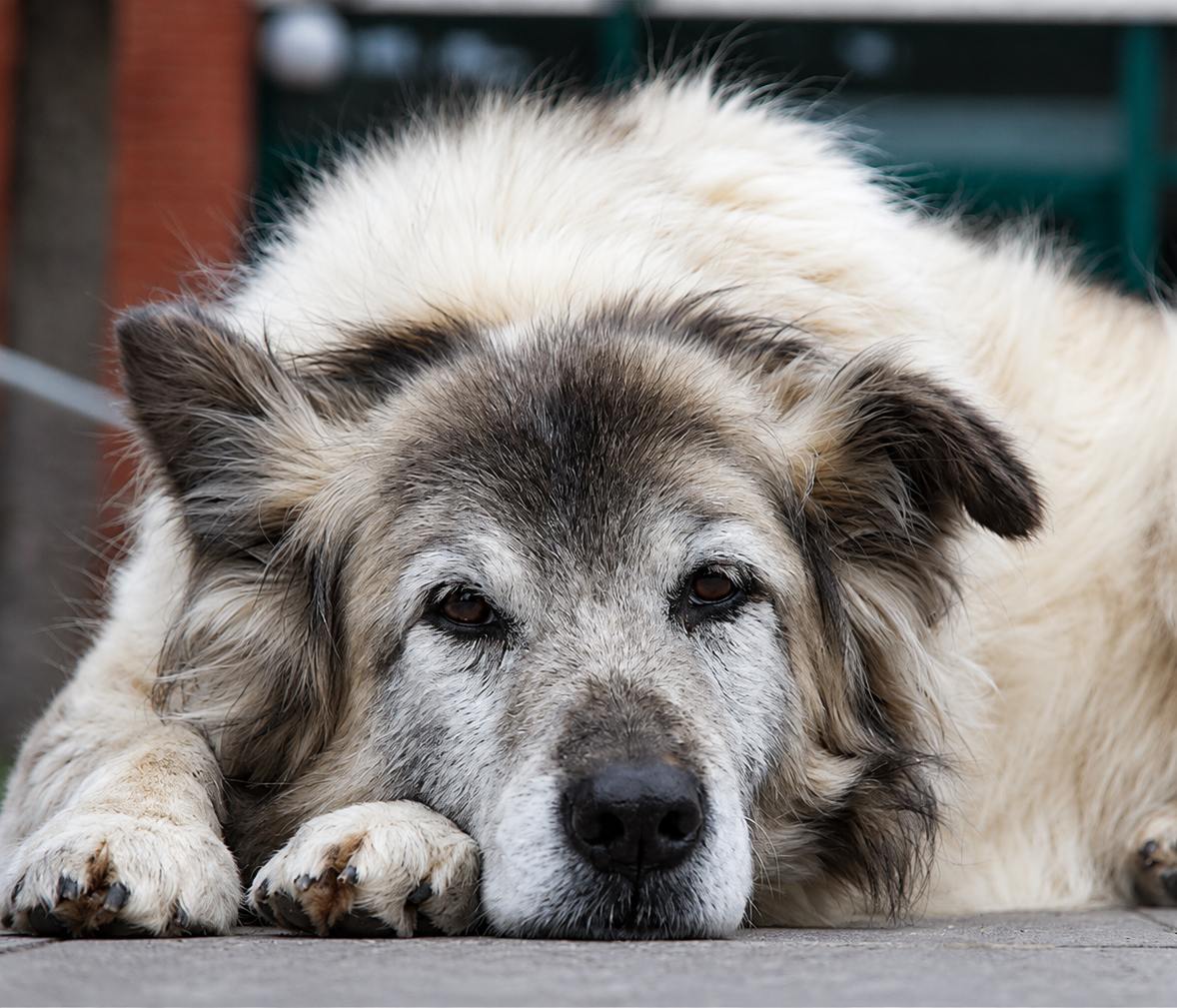
Cognitive decline in senior dogs, known clinically as canine cognitive dysfunction syndrome, is an age-related brain disorder that changes memory, awareness, sleep, and behavior. Early signs include nighttime pacing, confusion in familiar rooms, and new indoor accidents. A vet confirms it only after ruling out pain and other medical causes.
It usually starts small. A dog who has met you at the door for years stops getting up when you come home, or starts pacing the hallway at night. Each change looks like ordinary aging on its own, which is why the pattern is easy to miss.
How Common Cognitive Decline in Senior Dogs Is
Risk rises steadily with age. In the Dog Aging Project, a nationwide study of 15,019 companion dogs, the odds of cognitive dysfunction rose about 52 percent with each additional year of age, after accounting for health conditions, breed type, and activity. A senior pet wellness exam gives your vet a baseline to compare against as your dog ages.
The condition also goes unrecognized. According to Cornell University’s Riney Canine Health Center, dogs may start to develop it around nine years of age or older, and it may be underdiagnosed because the changes progress slowly and owners assume they’re a normal part of aging. Cornell describes the brain deterioration as similar to Alzheimer’s disease in people.
Normal Aging or Dementia in Dogs
Gray around the muzzle, longer naps, and shorter walks are expected in an older dog. Dementia in dogs is different because it changes how a dog understands their surroundings, not just their energy level. The comparison below shows the kind of difference worth bringing to a vet.
| Area | Usually Normal Aging | Worth a Veterinary Visit |
| Sleep | Sleeping more overall, still settled at night | Sleeping through the day, then pacing or vocalizing at night |
| Movement | Slower on stairs, shorter walks | Wandering aimlessly or getting stuck in corners |
| Family interaction | Less interest in rough play | Not greeting familiar people, or seeming not to recognize them |
| House training | Asking to go out a little more often | Accidents indoors soon after coming back inside |
| Response to cues | Missing quiet sounds | Hearing you, then looking confused about what the cue means |
One change on its own isn’t a diagnosis. Several changes that have built up over recent months are a reason to book an exam.
The Six Symptoms of Canine Dementia
Cornell’s senior dog dementia guidance points owners to the DISHAA assessment, which covers six areas. These are the symptoms of canine dementia that veterinarians ask about:
● Disorientation: staring at walls, waiting at the wrong side of a door, or getting stuck behind furniture.
● Interaction changes: withdrawing from the family, or becoming clingy with one person.
● Sleep-wake changes: sleeping through the day and restless through the night.
● House soiling: accidents indoors from a dog who was reliably house trained.
● Activity changes: aimless wandering, repetitive behaviors, or losing interest in toys.
● Anxiety: new fearfulness, trembling, or distress when left alone.
Any change in your dog’s behavior that doesn’t fit the personality your family knows is worth writing down with the date it started. A dated log turns a vague feeling into a pattern your vet can assess.
Conditions That Can Look the Same
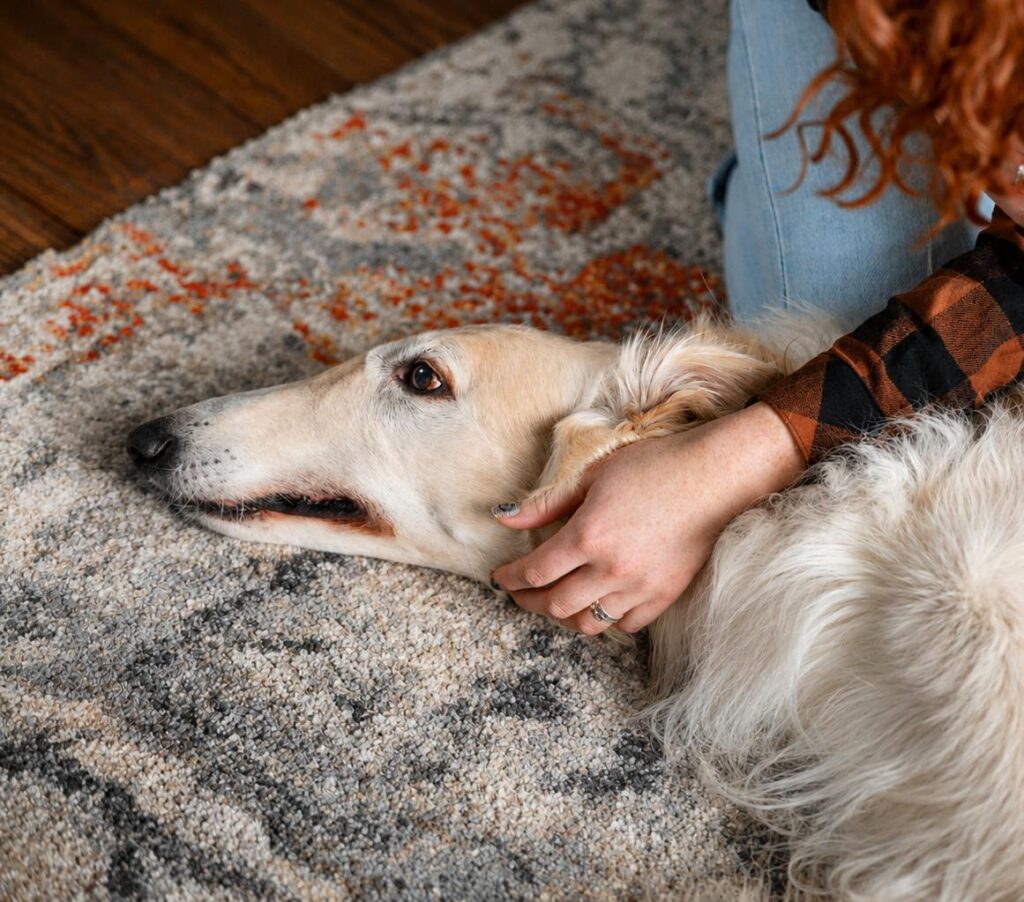
Several medical problems in older dogs produce signs that overlap with cognitive decline. In a 2023 study of 804 senior dogs, dogs with greater cognitive impairment also showed more signs of musculoskeletal and neurological problems, including pain and sensory decline. The authors advised screening senior dogs for other conditions, especially painful ones, whenever cognition is being assessed.
Pain is a common overlap. A dog with sore joints may stop greeting the family, snap when handled, and pace at night because lying down hurts. If joint pain is part of the picture, our guide on managing your dog’s arthritis pain covers the treatment side.
Timing is another clue. Cornell notes that vestibular syndrome, a balance disorder, is often confused with cognitive dysfunction syndrome, but it comes on suddenly. Cognitive decline builds gradually, so a change that appears overnight points toward a different cause.
How a Vet Reaches the Diagnosis
No single test confirms canine cognitive dysfunction. The diagnosis rests on two things together: a behavior pattern that fits, and a workup that finds no other explanation. That workup typically includes a physical exam and lab tests, and at Kainer Veterinary Hospital bloodwork runs through our on-site diagnostics.
Your observations carry real weight. Bring your dated log, a list of every medication and supplement your dog takes, and a short phone video of the behavior, since nighttime pacing or wall-staring rarely happens in the exam room.
What Helps Day to Day
Cornell’s guidance lists three areas of management: environmental enrichment, diet, and medical treatment, along with treating other conditions like arthritis and obesity. Selegiline is a medication approved for cognitive dysfunction syndrome in North America, and certain prescription diets are formulated with antioxidants and fatty acids to support the brain. Your vet will decide whether either fits your dog.
Activity is worth protecting. In the Dog Aging Project, dogs described as not active had 6.47 times the odds of cognitive dysfunction compared with very active dogs of similar age and health. Gentle walks, sniffing games, and play keep a senior dog engaged, and a predictable routine for meals, walks, and bedtime reduces the moments a confused dog feels lost.
The Limits of What We Know
The research has clear limits. The Dog Aging Project finding on activity is observational, so it can’t show whether inactivity leads to decline or decline leads to inactivity. The 2023 study of 804 dogs relied on owner-completed questionnaires to score cognitive impairment.
Treatment also has limits. Management aims to improve quality of life, and none of the options above has been shown to reverse the condition. Progress differs from dog to dog, so regular rechecks through your dog’s preventive care help catch new problems, like dental pain, that can make confusion worse.
Bringing Your Notes to an Exam
Start the dated log now, even if the changes seem minor. It gives your vet the timeline needed to separate a treatable condition from cognitive decline.
At Kainer Veterinary Hospital, senior exams start with your observations and a workup to rule out treatable causes before cognitive decline is diagnosed. Contact us today to book a senior wellness visit.
Sources
Yarborough et al., Scientific Reports (2022). Dog Aging Project study of 15,019 dogs; supports the 52 percent yearly rise in odds and the 6.47 times higher odds in inactive dogs.
Cornell University Riney Canine Health Center, Cognitive Dysfunction Syndrome (2025). Supports typical age of onset, underdiagnosis, the Alzheimer’s comparison, and management options including selegiline and diet.
Cornell University Riney Canine Health Center, Senior Dog Dementia (undated reprint). Supports the DISHAA assessment and the vestibular syndrome comparison.
Wrightson et al., Animals (2023). Survey of 804 senior dogs; supports the overlap between cognitive impairment, pain, and sensory decline.
FAQs
Q: What is the first sign of cognitive decline in senior dogs?
A: Early signs of cognitive decline in senior dogs can involve sleep, such as sleeping through the day and pacing at night, or mild disorientation in familiar rooms. Because these signs build slowly, a dated log of what you notice helps your vet see the pattern.
Q: Is dementia in dogs the same as cognitive decline?
A: Yes. Dementia in dogs is the everyday name for canine cognitive dysfunction syndrome, the medical term for age-related cognitive decline. Both describe the same condition affecting memory, awareness, sleep, and behavior.
Q: Can cognitive decline in dogs be reversed?
A: No treatment has been shown to reverse it. Management focuses on quality of life through enrichment, diet, routine, treating other conditions, and medication such as selegiline when your vet thinks it fits.
Q: How is canine dementia diagnosed?
A: There’s no single test. Your vet matches the behavior pattern to the DISHAA signs and rules out other causes, such as pain or sensory loss, with an exam and lab work. Your notes and videos are part of the evidence.
Q: At what age do dogs typically show symptoms of canine dementia?
A: Cornell notes that dogs may start to develop cognitive dysfunction around nine years of age or older. In the Dog Aging Project, the odds rose about 52 percent with each additional year of age.