

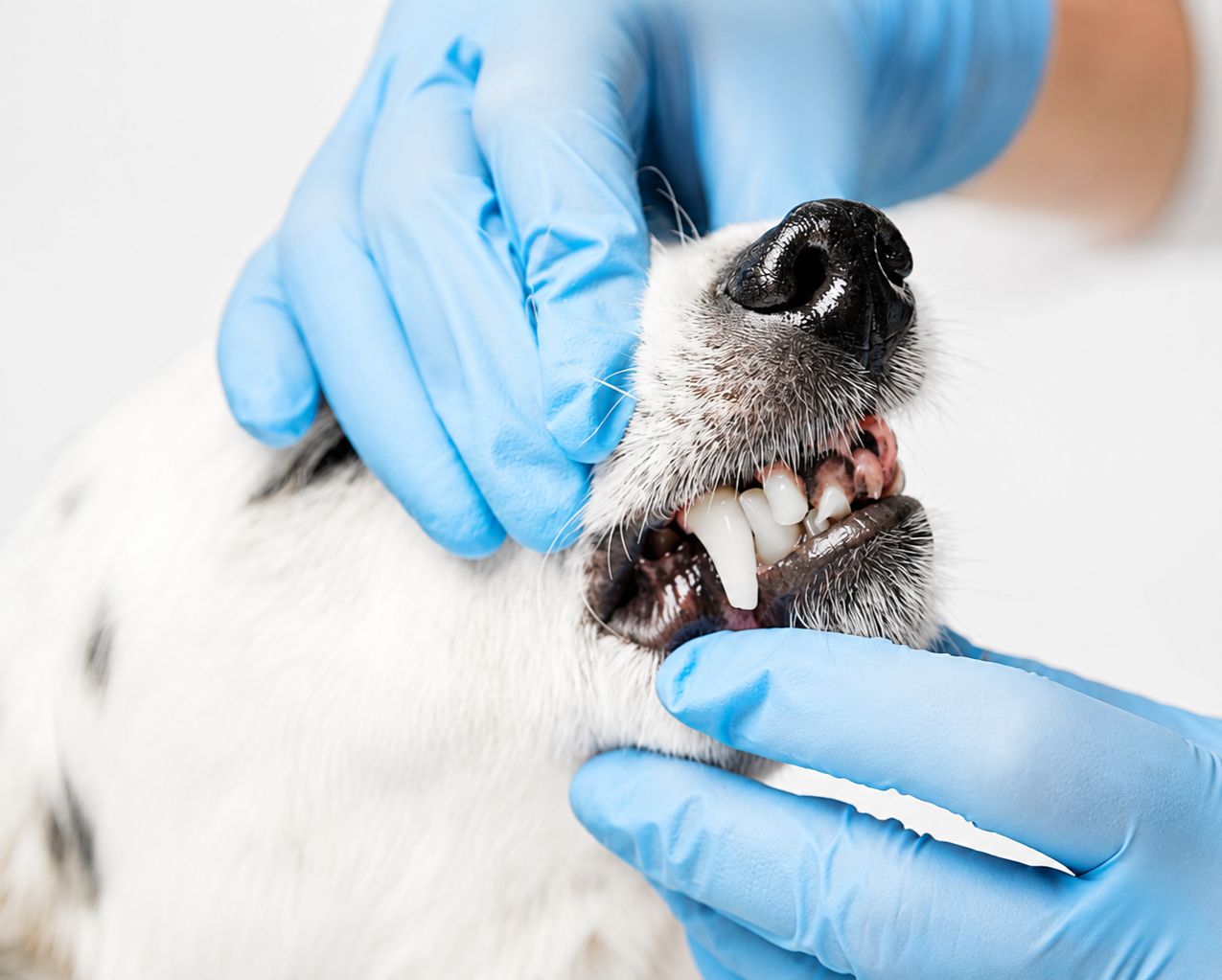
A dog tooth extraction removes a tooth that is too damaged, infected, or diseased to function without ongoing pain. Most dogs go home the same day, return to normal eating within one to two days, and the extraction site itself finishes healing within about two weeks.
Understanding Dog Tooth Extraction
Why Vets Recommend Extraction Rather Than Saving the Tooth
Veterinary dentists prefer to save a tooth whenever it is realistic to do so, and extraction gets recommended only once a tooth is too damaged or diseased to function without ongoing pain or infection. Dogs are skilled at hiding dental pain, which is part of why the hidden signs of dental disease in dogs are so easy for owners to miss until the problem has already progressed. A veterinarian only recommends extraction after confirming, through examination and imaging, that no other option gives the tooth a realistic future.
How Common Dental Disease Actually Is
According to Cornell University’s Riney Canine Health Center, 80 to 90% of dogs over age 3 have some degree of periodontal disease, which makes it one of the most common conditions a veterinarian treats in dogs of any breed. Small and toy breeds are especially prone to crowded teeth and early periodontal disease, while dogs of any size can fracture a tooth on a hard chew toy, a bone, or an object picked up in the yard. Age plays a role too, since years of gradual tartar buildup weaken the support around a tooth long before an owner notices anything wrong.
Breed shape matters as well. Dogs with shorter muzzles often have teeth crowded into less space than their jaw was built for, which raises the odds of early periodontal disease in specific areas of the mouth. Not every dog with a crowded jaw ends up needing an extraction, but the pattern explains why regular dental checkups catch so many of these problems well before they become an emergency.
Anesthesia Safety for Every Age
Extraction requires general anesthesia, and understandably this raises questions for owners of senior dogs or dogs with existing health conditions. Modern anesthesia protocols are tailored to each dog’s age, weight, and health status, with continuous monitoring throughout the procedure. Pre-anesthetic bloodwork gives your veterinarian the information needed to adjust the plan for an older or medically complex dog, which is why this step is rarely skipped even when a dog seems perfectly healthy going into the appointment.
Why Anesthesia-Free Cleanings Fall Short
Anesthesia-free dental cleanings are sometimes marketed as a gentler alternative, but they only address what is visible above the gumline and cannot safely probe below it, where most serious dental disease actually develops. A dog has to stay completely still for a thorough exam of every tooth surface and pocket depth, something only anesthesia reliably allows. Without that access, a tooth that needs extraction can look deceptively fine on the surface while the damage underneath continues unnoticed.
Conditions That Make Extraction Necessary
Periodontal Disease
Periodontal disease is the leading cause of tooth loss in dogs. Plaque hardens into tartar along the gumline, bacteria work beneath the gum tissue, and the bone and ligament holding the tooth in place slowly break down. Once a tooth has lost enough of its supporting structure, it becomes loose and painful, and no professional cleaning can restore that lost support. The importance of dental health for dogs and cats explains how the disease progresses stage by stage.
Tooth Root Abscess
A tooth root abscess develops when bacteria reach the pulp at the center of a tooth, often through a deep crack or advanced periodontal disease, and the infection spreads to the root tip and surrounding bone. It frequently shows up as sudden facial swelling below one eye, sometimes with a draining wound, or a dog who suddenly resists having the side of their face touched. Because the infected tooth is the source of the problem, extraction alongside antibiotics is almost always required to resolve it fully.
Fractured Teeth
Hard chews, bones, and even ice can fracture a tooth, and a fracture that exposes the sensitive pulp inside is painful and prone to infection. Some fractures can be treated with a root canal to save the tooth, but many, especially older fractures where infection has already set in, are better resolved with extraction. A dental X-ray is what tells your veterinarian whether saving the tooth is realistic.
Crowding and Retained Baby Teeth
Small and toy breeds frequently have more teeth than their jaw comfortably fits, which traps food and bacteria between crowded teeth. Puppies that retain baby teeth past the point their adult teeth erupt face a similar problem. In both situations, selectively extracting a tooth relieves pressure on the rest of the mouth and helps prevent periodontal disease in that area later.
What Happens if a Damaged Tooth Is Left Untreated
A tooth that clearly needs to come out does not improve on its own with time. Periodontal disease continues to destroy the bone supporting the tooth, an abscess continues to spread infection into the surrounding jaw, and a fracture that exposes the pulp stays a source of chronic pain and a route for bacteria to enter the bloodstream. Delaying treatment rarely makes the eventual extraction easier and often makes it more involved, since more bone loss or a spreading infection can complicate the procedure later.
How Vets Decide an Extraction Is the Right Call
Not every damaged tooth needs to come out, so this decision starts with a real comparison rather than a foregone conclusion. Here is how that comparison usually plays out once a veterinarian has the imaging in hand.
| Factor | Attempting to Save the Tooth | Extraction |
| Long-term outcome | Depends entirely on how much bone and pulp damage already exists | Ends the pain regardless of how advanced the damage was |
| Follow-up needed | Often needs repeat imaging, a root canal specialist, or both | Usually finished in a single visit |
| Best suited for | A structurally intact tooth with a treatable fracture caught early | Advanced periodontal disease, an abscess, or a fracture that already exposed the pulp |
Diagnostic Workup Before Surgery
Diagnosis begins with a thorough oral exam under anesthesia, since an awake exam cannot safely assess pocket depth, mobility, or pain the way a sedated one can. Dental X-rays are essential at this stage, since much of a tooth’s structure and the disease affecting it sits below the gumline where the naked eye cannot see it. A tooth that looks stable on the surface can show significant bone loss or a root abscess once imaging reveals what is happening underneath, and that finding often changes the plan entirely.
Pre-anesthetic bloodwork is typically recommended as well to confirm your dog is a safe candidate, which matters even more for older dogs, and results are usually available the same day, before the procedure moves forward.
What to Bring If Your Dog Was Already Evaluated Elsewhere
If a primary care veterinarian already noted a concerning tooth or took preliminary X-rays before referring your dog for extraction, bringing those images and records along saves time and avoids repeating imaging that already gave a useful answer. A brief written summary of any pain medication or antibiotics already tried is also worth bringing, since it helps your veterinary team understand what has and has not worked so far. When records are not available before the appointment, your veterinary team can usually request them directly from the referring clinic.
What Happens During the Procedure
Anesthesia and Pain Control
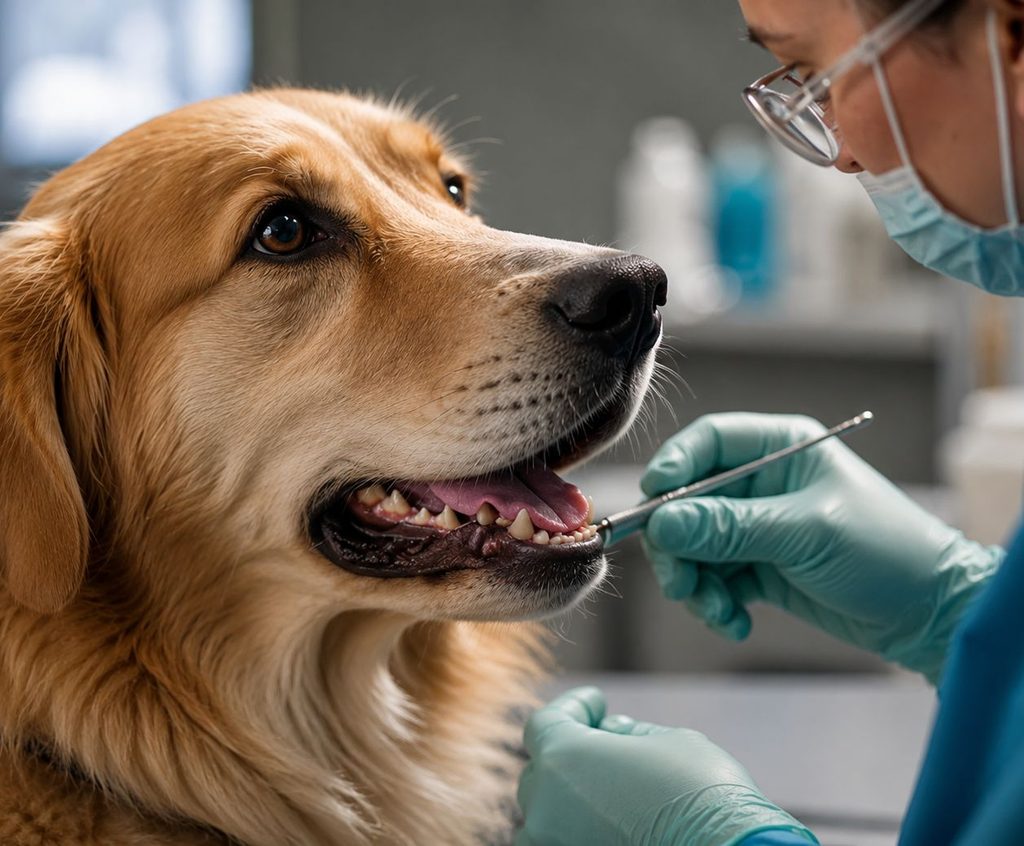
A dog is placed under general anesthesia for the extraction, and the veterinary team tracks heart rate, blood pressure, and oxygen levels continuously from the first incision to the last suture. Local dental nerve blocks are commonly used as well, providing extra pain control both during surgery and as the anesthesia wears off. This combination keeps the procedure considerably more comfortable than many owners expect.
Simple Versus Surgical Extractions
A simple extraction is used for a single-rooted tooth with minimal remaining attachment, removed with dental instruments in a straightforward motion. A surgical extraction is needed for multi-rooted teeth or teeth with strong bone attachment, and involves gently lifting the gum tissue, sometimes sectioning the tooth, and removing each root individually before closing the site with dissolvable sutures. You can learn more about how the practice approaches this on the dental extractions service page.
How Long the Procedure and Hospital Stay Typically Take
A single tooth extraction often takes well under an hour once your dog is under anesthesia, though the total time your dog spends at the hospital that day is longer once you account for pre-anesthetic preparation, the procedure itself, and monitored recovery from anesthesia. Most dogs go home the same day, once they are alert, walking normally, and able to hold down water. A dog needing several extractions in one visit, or a more involved surgical extraction, may need a bit more monitoring time before discharge, and your veterinary team will let you know what to expect for your dog’s specific procedure.
Dog Tooth Extraction Recovery
The First Two Weeks at Home
An extraction site heals faster than most owners expect, but the first week still asks for real attention: soft food, medication given on schedule, and a close eye on the mouth.
- Offer soft or moistened food for the first one to two weeks so the extraction site is not disturbed by hard kibble.
- Avoid chew toys, bones, and rough play with toys in the mouth until your veterinarian confirms healing is complete.
- Give all prescribed pain medication and antibiotics on schedule, even if your dog seems comfortable early on.
- Check the mouth gently once daily for unusual swelling, bad odor, or bleeding that does not resolve.
- Keep the follow-up appointment if one is recommended, particularly after a surgical extraction involving multiple roots.
When to Call Your Veterinarian During Recovery
Most dogs recover from an extraction without any trouble, but a few signs are worth calling about right away instead of waiting for a scheduled recheck. These include bleeding from the mouth that does not stop within a few minutes, a swollen face that is getting worse rather than better, a foul odor beyond normal healing, or a dog who refuses all food for more than a day. Catching a developing infection or a dislodged suture early keeps a minor setback from turning into a bigger one.
Managing Comfort at Home
Pain control is a central part of dog tooth extraction recovery, and your veterinarian sends home medication dosed specifically for your dog’s weight and the extent of the procedure. A quiet space to rest, easy access to water, and softened food all support a comfortable recovery. This guide on post-surgical comfort guidance covers the broader principles that apply during any surgical recovery, extraction included.
Adapting to Multiple Missing Teeth
A dog missing several teeth, even most of them in a severe periodontal disease case, typically adapts within days. Dogs rely far less on a full set of teeth for normal eating than owners often expect, and most transition comfortably to a softer diet or smaller kibble without difficulty. Once the source of chronic pain is gone, many dogs chew and eat just as well as before, sometimes more readily, simply because it no longer hurts.
Where Recovery Genuinely Gets Harder
Most extractions go smoothly, and this is one of the more predictable procedures in veterinary surgery, but “predictable” is not the same as “risk-free,” and a page that only lists the upside is not telling the whole story.
Small and toy breeds carry a real, documented surgical risk that larger dogs mostly do not: because of how a small dog’s jaw is proportioned, extracting a lower canine or a molar in a heavily affected jaw can, in rare cases, fracture the mandible itself, according to veterinary dentistry specialist Kendall Taney, DVM, DAVDC, FAVD. This is uncommon and is something your veterinarian screens for with dental X-rays before ever picking up an instrument, but it is a real possibility worth knowing about rather than discovering for the first time in a consent form.
A dog with several affected teeth, or a case complicated by an abscess or advanced bone loss, will generally cost more and take longer to recover from than a single, straightforward extraction. That variation is normal, and it is exactly what the diagnostic workup above is meant to clarify before surgery day, not after it.
Protecting the Remaining Teeth
Daily Care at Home
Daily or near-daily toothbrushing remains the single most effective habit an owner can adopt, and it works best when introduced gradually so the dog stays relaxed about it. Dental chews and water additives approved by your veterinarian can support that routine between brushings, though they work best alongside brushing rather than in place of it.
How Small and Toy Breeds Benefit From Extra Attention
Small and toy breeds tend to need extraction more often over a lifetime simply because their teeth are proportionally larger relative to their jaw, which crowds them together and accelerates periodontal disease in specific areas. This does not mean these breeds are destined for repeated extractions, but it does mean that closer, more frequent monitoring pays off. Catching a problem tooth early in a small dog is often the difference between one straightforward extraction and a more involved procedure years later.
Choosing Dental Chews and Diet Wisely
Not every dental chew on the market is appropriate for every dog, and choosing poorly can create new problems rather than preventing them. Chews that are too hard can fracture teeth, which is one of the very causes of extraction covered earlier in this guide. Your veterinarian can point you toward products carrying the Veterinary Oral Health Council seal, which indicates a level of testing for plaque and tartar control, and can advise on texture and size appropriate for your dog’s remaining teeth and chewing habits.
The Role of Ongoing Professional Care
Consistent professional care matters just as much as anything done at home. The benefits of routine dental care for your pet explains how regular checkups and cleanings catch problems long before they progress to the point of needing extraction, since a veterinarian can see and probe areas an owner cannot check at home. Scheduling that follow-up care on a predictable cadence is what protects a dog’s remaining teeth for years to come.
Questions Worth Asking Before the Procedure
Owners often think of the day of surgery as the moment to ask questions, but reviewing a few points beforehand tends to ease the most worry. Asking how many teeth are likely affected, what the anesthesia plan looks like for your dog specifically, and what pain medication will be sent home gives you a clearer picture of what to expect. Your veterinary team would rather answer these questions ahead of time than have you wondering about them during a stressful moment on the day itself.
Giving Your Dog a Comfortable, Healthy Mouth
At Kainer Veterinary Hospital, Dr. Daniel Kainer and the dental team provide thorough oral exams, dental X-rays, and extraction surgery with careful anesthesia monitoring for dogs of every age, serving pet families throughout the greater Woodlands area. Contact the practice to schedule a dental evaluation if you have noticed any signs of dental pain in your dog.
FAQs
Q: How do I know if my dog needs a tooth extraction?
A: Bad breath, chewing on one side, facial swelling, or reluctance to eat hard food can all point toward a dental problem serious enough to need extraction. A dental exam with X-rays is the only way to confirm whether a tooth can be saved, since much of the relevant damage is not visible without imaging.
Q: What does a tooth root abscess in a dog look like?
A: A tooth root abscess most often shows up as sudden swelling below one eye, sometimes with a draining wound, along with pain when the face is touched or food is chewed. It calls for prompt veterinary evaluation, since the infected tooth almost always needs to be extracted for the infection to fully resolve.
Q: How long does dog tooth extraction recovery take?
A: Most dogs return to normal energy and appetite within one to two days, while the extraction site itself takes about ten to fourteen days to fully heal. Soft food, restricted chewing, and any prescribed medication during that window support a smooth recovery.
Q: Will my dog be in pain after a tooth extraction?
A: Your veterinarian sends home pain medication tailored to the procedure, and most dogs are noticeably more comfortable within a day or two once the source of dental pain is gone. Contact your veterinarian if your dog seems unusually painful, will not eat at all, or shows swelling that worsens instead of improving.
Q: How can I help prevent my dog from needing another extraction?
A: Daily toothbrushing paired with regular professional dental checkups gives your veterinarian the chance to catch new problems long before they reach the point of needing extraction. Pet dental care in The Woodlands area at Kainer Veterinary Hospital includes the imaging and exams needed to monitor your dog’s mouth over time.