

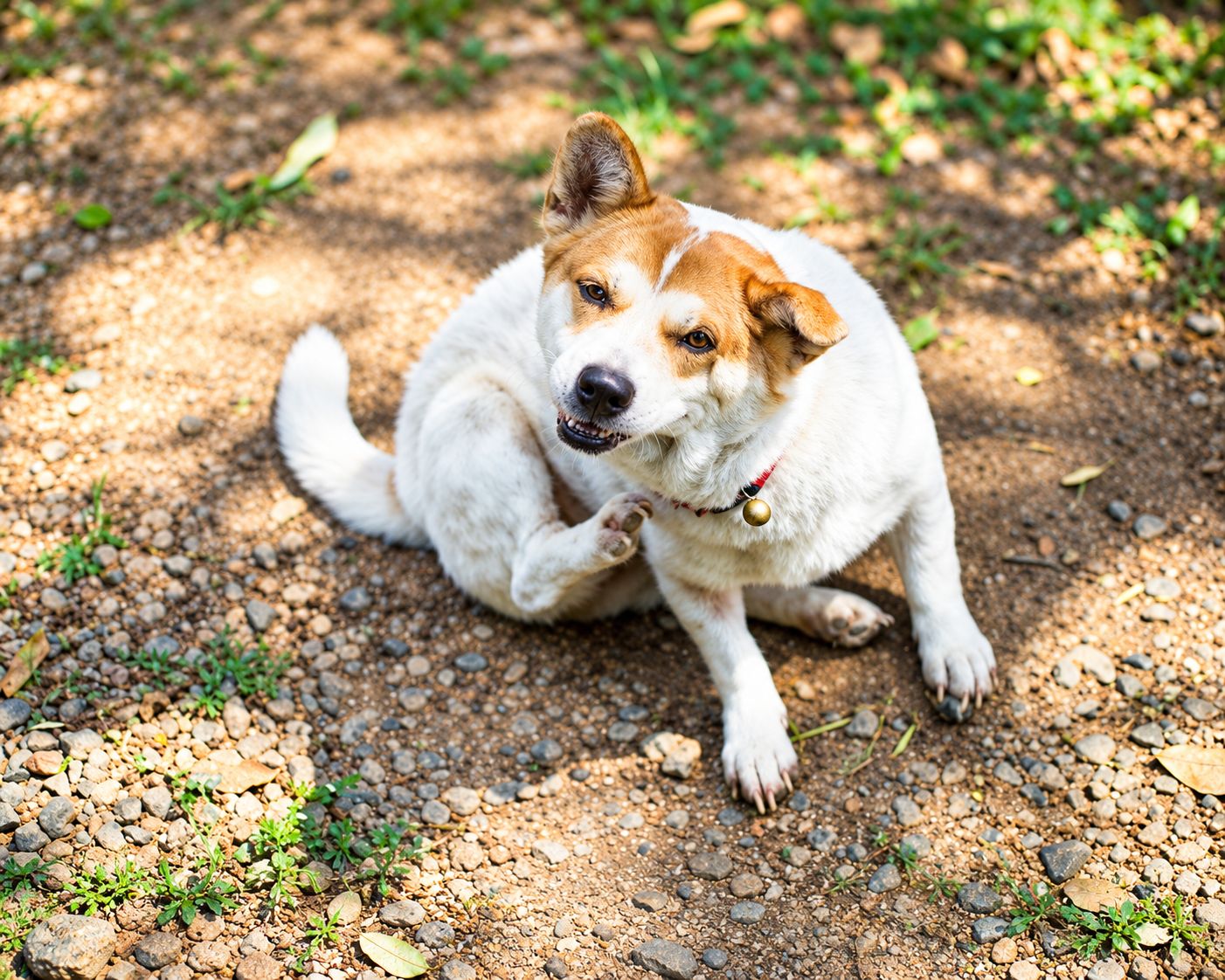
Ragweed allergy in dogs mainly shows up on the skin, as itchy paws, scratched ears, and red patches on the belly and face, according to the Merck Veterinary Manual. Itching that returns every fall deserves a veterinary exam, because ragweed is only one of several possible causes.
Dogs with environmental allergies, known as atopic dermatitis, can have signs that are seasonal, year round, or year round with seasonal flares, and fall brings ragweed pollen and heavy mold counts to the Houston area. Pollen may be part of the reason a dog itches more in fall, but house dust mites, fleas, and skin infections can cause the same itching, so a fall pattern does not confirm a ragweed allergy by itself. The pollen counts in this guide come from the Houston Health Department laboratory, which tracked ragweed climbing through September and peaking in October in 2024 and 2025. Conroe and The Woodlands have no counts of their own in this data, so treat the Houston figures as a regional guide.
When Ragweed Pollen Peaks in Southeast Texas
The Houston Health Department counts pollen every weekday with a spore trap on the roof of its city laboratory, and it reports ragweed by its Latin name, Ambrosia. Weed pollen counts of 50 to 499 grains per cubic meter of air are labeled Heavy, and anything above 500 is labeled Extremely Heavy. The table summarizes daily reports reviewed for this guide. They are a sample of reports from each month and not every day of the season.
| Month | 2025 ragweed grains per cubic meter | 2024 ragweed grains per cubic meter |
| September | 0 to 400 (7 reports) | 95 (1 report) |
| October | 73 to 742 (8 reports) | 81 to 769 (7 reports) |
| November | 2 to 95 (10 reports) | 6 to 40 (10 reports) |
| Highest report reviewed | 742 on October 6 | 769 on October 15 |
All 15 October reports reviewed were rated Heavy or Extremely Heavy, and the highest days were October 15, 2024, and October 6, 2025. Every November report reviewed had fewer than 100 ragweed grains per cubic meter. Adding up the 15 October reports, ragweed made up about 97 percent of the weed pollen counted, which is total ragweed grains divided by total weed pollen grains. On September 30, 2026, the laboratory reported 60 ragweed grains, rated Heavy.
These are Houston laboratory figures and not measurements taken in Conroe, The Woodlands, or Montgomery. Timing also shifts with the weather from year to year, so use the table as a picture of two seasons and check the current counts.
Mold also reaches high levels in fall. The laboratory rated mold Heavy, at 13,000 spores per cubic meter or more, on four October 2025 reports and five November 2024 reports, though other reports in those months were Medium. For a broader look at pet triggers, our guide to seasonal allergy signs in pets covers more of them.
What a Ragweed Allergy in Dogs Looks Like
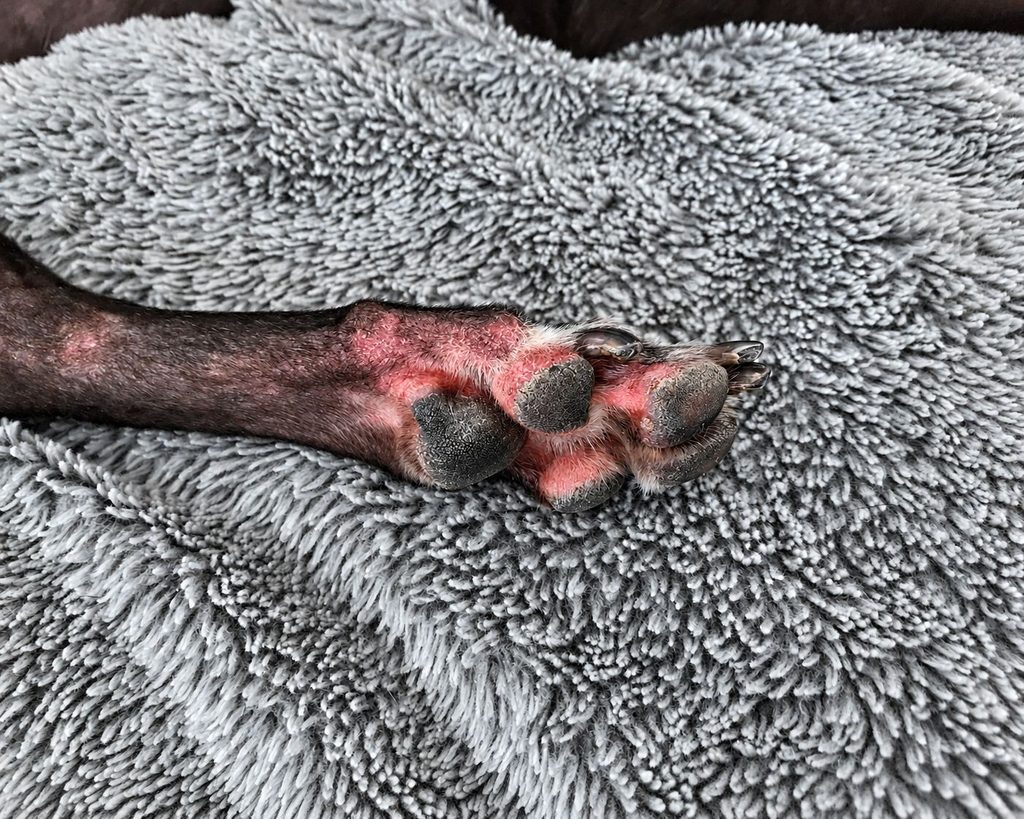
The skin is the main target of atopic dermatitis in dogs, although the nose and stomach can be involved too, according to Merck. Allergens can be inhaled or absorbed through the skin, so pollen can reach a dog through the air or by contact. The paws, face, ears, front legs, armpits, and belly are the usual trouble spots. Watch for these signs:
- Licking and chewing the paws: constant licking and chewing can leave the skin red and sore.
- Rubbing the face: the face is one of the usual places for itching.
- Scratching or shaking at the ears: repeated ear infections can be the only sign in some dogs.
- Red skin under the front legs and on the belly: these areas are often involved.
- Hair loss, scabs, or darkened skin: these usually develop from the scratching itself.
- Infections on top of the itch: bacterial and yeast infections of the skin and ears are common and often make the signs worse.
The condition usually begins between 6 months and 3 years of age, and breeds such as Golden Retrievers, Labrador Retrievers, Boxers, and Shih Tzus are predisposed. A dog with fall allergies may show a pattern, with itching that starts around the same weeks each year. A pattern does not prove ragweed.
What to Do When the Itching Starts
Start by looking closely at your dog. Check the paws, ears, belly, and armpits for redness, sores, scabs, or hair loss, and look through the coat for fleas or flea dirt. Our guide to the signs of fleas and ticks in dogs explains what to look for. Write down when the licking, scratching, or head shaking starts, how bad it is, and the weather that week.
A few steps are reasonable while you arrange a visit. Wiping the paws and coat with a damp cloth after outdoor time may remove pollen, and Merck recommends weekly to biweekly baths for dogs with atopic dermatitis, with your veterinarian choosing the shampoo. Keep flea prevention current, because fleas are a recognized flare factor. Do not give human allergy medications or try home remedies without checking with your veterinarian, because the right product and dose depend on your dog.
If the itching is mild and your dog is resting and eating normally, keep your notes and mention them at the next visit. Routine pet wellness exams are a good time to do that. Book an exam if your dog cannot rest, if the skin is open, crusted, or losing hair, if the ears are red or your dog shakes its head, or if the itching comes back every fall. Infections often worsen the signs, and repeated ear infections can be the only sign, so waiting for the season to end can let a small problem grow.
Get urgent veterinary care right away for trouble breathing, collapse, or sudden severe swelling of the face. Call your veterinarian or go to the nearest emergency animal hospital, because these signs can mean a severe allergic reaction or another emergency.
What the Evidence Can and Cannot Tell Us About Ragweed
Ragweed makes up nearly all of the weed pollen in Houston air in October, but pollen in the air does not prove pollen is what makes a particular dog itch. Two studies show why.
A 2013 paper in Veterinary Immunology and Immunopathology reports that about 66 percent of atopic dogs in Serbia reacted to ragweed on a skin test, second to house dust mites. A reaction on a test shows sensitization, which means the immune system recognizes the allergen, and it does not show that the allergen is behind the dog’s itching.
A 2024 study from LMU Munich followed 37 atopic dogs in Bavaria from April to November 2021 and found no link between daily pollen counts and itch scores in dogs that tested positive to that pollen. The authors question whether outdoor pollen traps reflect what dogs at ground level breathe, and they note that atopic dogs react to mites, mold spores, and pollen from grasses, trees, and weeds.
That makes pollen counts a rough guide, and your own notes on your dog’s itching are worth keeping alongside them. No study located for this guide ranks ragweed first among fall allergens for dogs in Southeast Texas, so this guide does not make that claim. The Serbian figure comes from an abstract, and the Bavarian study followed 37 dogs in one year.
How a Veterinarian Finds the Cause of the Itch
There is no single test for atopic dermatitis. A veterinarian starts with your dog’s history and an exam, and then works to rule out other causes of persistent itching, such as fleas, mites, skin infections, and food reactions. Merck describes the diagnosis as based on the signs, the history, and the exclusion of those other causes. Because of that process, a dog ragweed allergy cannot be confirmed from the signs alone.
Allergy testing, done on a skin or blood sample, shows what a dog reacts to. On its own it does not diagnose atopic dermatitis, and a positive result does not prove ragweed is the cause of the itching. Testing is mainly used when allergen specific immunotherapy is being considered, to choose which allergens go into the treatment, and results are useful only when they match the dog’s history and season. Not every itchy dog needs allergy testing. Our diagnostic services include lab testing done at the hospital that can support the workup.
What to Expect From Treatment
Environmental allergies in dogs cannot be cured, according to Merck, but they can be managed, and the condition needs lifelong management with regular progress checks. Treatment usually combines relief of the itch, care of the skin barrier, and control of infections, and flares can still happen in a well controlled dog. A relapse should prompt a check for fleas, infections, and food or environmental allergens.
One option veterinarians use is allergen specific immunotherapy, which means allergy shots or drops that train the immune system to tolerate chosen allergens. Merck calls it the only treatment that can change a dog’s immune response to allergens, but response can take 3 to 12 months and it is not used for sudden flares. In a 2022 study of 664 dogs treated with injections for at least 9 months, about 60 percent improved by more than half, and about half of those dogs still needed other medication. Whether it suits a particular dog is a decision for your veterinarian. Our guide on allergy shots for dogs explains the process in more detail.
Getting Your Dog Comfortable Before the Itching Becomes an Infection
Persistent licking, scratching, or ear irritation is worth an exam, and so is itching that returns every fall. An exam can find fleas, infections, or other causes that are easy to miss at home, and it gives your veterinarian a starting point for a plan that fits your dog. Notes on when the itching starts and what changed make that visit more useful.
At Kainer Veterinary Hospital, our veterinarians provide dermatology care for a dog with fall allergies or other itching, including skin scrapings and allergy testing, along with wellness exams and diagnostic services. We serve pet families in Conroe, The Woodlands, Montgomery, and the surrounding areas. To schedule an exam, request an appointment online or contact us today.
Sources
Houston Health Department, Houston Pollen and Mold Reports (accessed 2026). Official city health department laboratory data. Supports the ragweed counts and weed pollen levels on the dated 2024, 2025, and 2026 reports, the monthly ranges in the table, the 97 percent ragweed share calculated from the 15 October reports, the mold counts, and the count categories. Covers the city of Houston only.
Merck Veterinary Manual, Atopic Dermatitis in Dogs (reviewed May 2026). Peer reviewed veterinary reference written by a board certified veterinary dermatologist. Supports the seasonal pattern, the signs and trouble spots, age and breed, infections, diagnosis and testing limits, flare factors, bathing, lifelong management, and the immunotherapy figures.
LMU Munich Faculty of Veterinary Medicine, A Prospective Study Evaluating the Correlation Between Local Weather Conditions, Pollen Counts and Pruritus of Dogs With Atopic Dermatitis (2024). Peer reviewed journal article from a university veterinary faculty (Veterinary Dermatology), read as an open access abstract. Supports the 37 dog Bavarian study, the finding that pollen counts did not track itch scores, the caution about airborne pollen traps, and the list of allergen families atopic dogs react to.
University of Belgrade, Immunoproteomic Characterization of Ambrosia artemisiifolia Pollen Allergens in Canine Atopic Dermatitis (2013). Peer reviewed journal article from a university (Veterinary Immunology and Immunopathology), read as an abstract through the University of Belgrade repository. Supports the 66 percent skin test figure for atopic dogs in Serbia and its rank behind house dust mites.
FAQs
Q: What is the first sign of ragweed allergy in dogs?
A: Itching is the main sign. Dogs lick and chew their paws, rub their faces, scratch or shake at their ears, and develop red skin on the belly and under the front legs. Repeated ear infections can be the only sign in some dogs, so a pattern of itching each fall is worth a veterinary visit.
Q: Can dogs be allergic to ragweed?
A: Yes. A 2013 study reported that about 66 percent of atopic dogs in Serbia had a positive skin test to ragweed, second to house dust mites. A positive test shows a dog reacts to ragweed and does not prove it causes the itching, so your veterinarian rules out fleas, infections, and other allergens first.
Q: When does ragweed season peak in Southeast Texas?
A: In Houston Health Department reports for 2024 and 2025, ragweed counts were highest in October, reaching 769 grains per cubic meter on October 15, 2024, and 742 on October 6, 2025. Every November report reviewed was under 100. These are Houston figures, and timing shifts with the weather, so counts may differ in Conroe and The Woodlands.
Q: Does an allergy test confirm a dog ragweed allergy?
A: No. Allergy testing alone does not diagnose atopic dermatitis, and a positive result does not prove ragweed is the cause of the itching. Testing is mainly used to choose allergens when immunotherapy is being considered, and not every itchy dog needs it. Diagnosis comes from the signs, the history, and ruling out fleas, infections, and other causes.
Q: Can environmental allergies in dogs be cured?
A: No, according to Merck, but they can be managed. Management is lifelong, with regular checks, and flares can still happen even in a well controlled dog. Notes on when your dog itches, and what the weather and counts were that week, help your veterinarian adjust care.